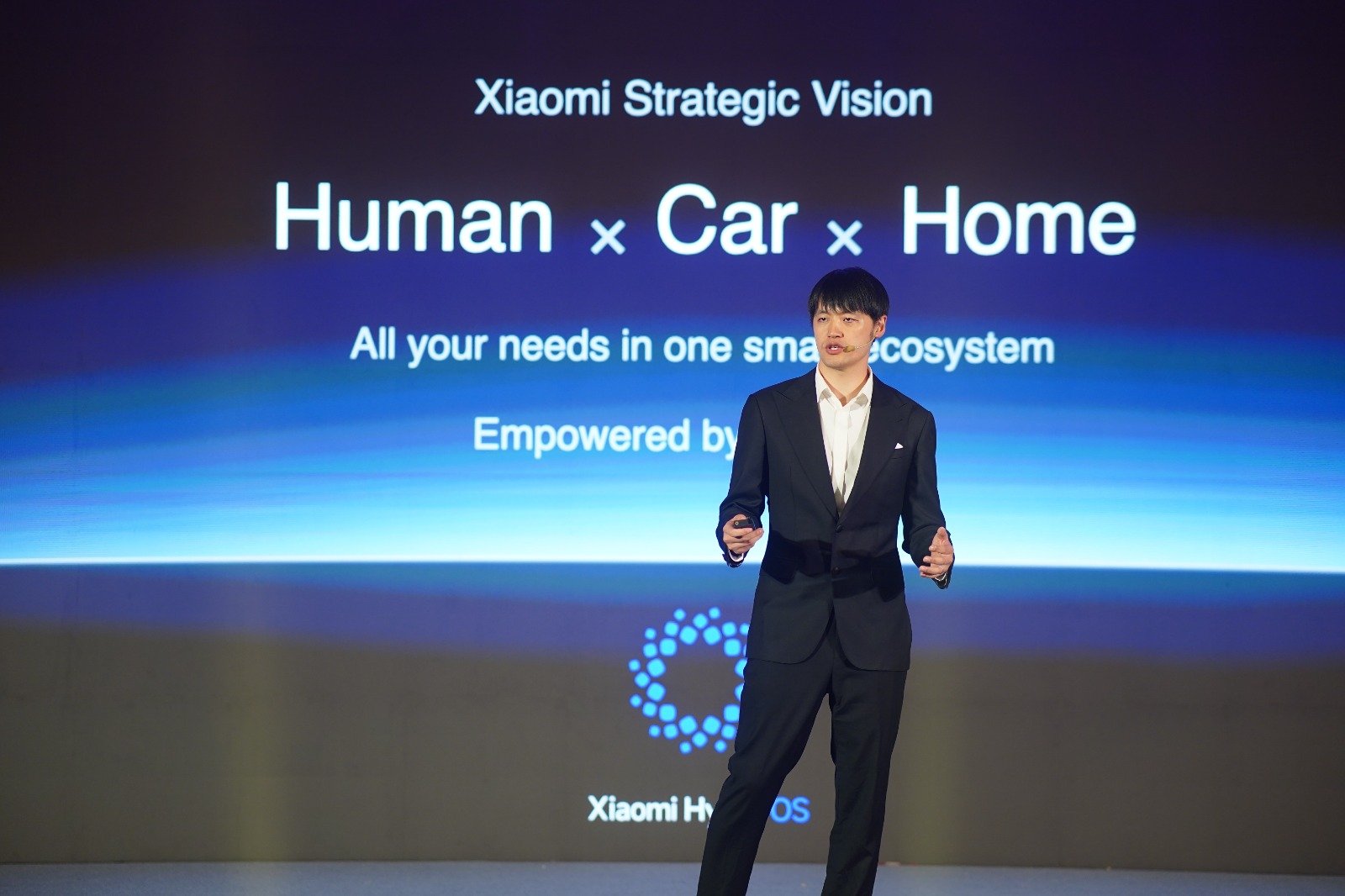
Seventeen years ago, Xiaomi entered the smartphone market with a simple mission: to build flagship-quality phones that ordinary people could afford. Today, the company has expanded into connected devices, home appliances and electric vehicles. In a wide-ranging conversation with The Bangladesh Post, Liu Chang, Deputy Country Manager of Xiaomi Bangladesh, spoke about Xiaomi's “Human × Car × Home” ecosystem, local manufacturing, AI, data privacy, sustainability and the company's long-term plans for Bangladesh.
Xiaomi is focusing heavily on its “Human × Car × Home” ecosystem. What does this mean for Bangladeshi consumers?
We started with a flagship-spec smartphone at roughly a fifth of the price of competitors, mainly by cutting channel and marketing costs and keeping our lineup simple. That formula later extended to TVs, routers, wearables and electric vehicles, which now sell more than 30,000 units a month in China.
Now we connect everything through HyperOS, so devices work together rather than operating in isolation. In China, for example, when I park my Xiaomi car at home, it can automatically turn on the air conditioner and rice cooker and even control the curtains. That's the future we're building, and as electronics become more affordable, it should become the norm rather than a luxury.
For Bangladesh, the building blocks are already here. We started with smartphones, and this year launched smart TVs, washing machines, washer-dryers and air purifiers. I believe the tipping point for this kind of adoption is two to three years away. Once early adopters and opinion leaders show the market what is possible, it will become a mass market.
What sets Xiaomi apart as it expands into AIoT and home appliances?
Xiaomi was born to compete. Our early rivals included Motorola, HTC and Samsung. We've since grown into one of the world's largest smartphone brands by volume.
First, we keep investing in technology. We co-engineer camera systems with Leica, have developed our own three-nanometre chipset and our own large language model, MiMo, which is used internally and by external firms.
Second is the scale of our connectivity. Our global IoT platform linked more than 1.118 billion devices, excluding phones and laptops, as of March 2026. Third is the ecosystem effect. In China, more than 30 percent of our EV buyers are iPhone users, attracted by how seamlessly everything works together.
I also don't believe in charging extra just for the brand name. We invest heavily in R&D but keep everything else lean, so users can get flagship technology without the flagship price.
What's the philosophy behind Xiaomi's value-driven approach?
I know this sounds counterintuitive, but Xiaomi believes that if you want to make the most money, you have to make less money.
Our founder, Lei Jun, has committed to keeping the group's profit margin relatively low. On smartphones, our margin is lower than industry average profit. I draw inspiration from Costco's near-uniform markup. They built their business around long-term trust rather than short-term revenue, and that's exactly what we're after.
I want to make small money every year, but for 100 years.
That trust allows someone who bought our phone to come back and buy our air fryer without worrying about being overcharged. Democratising technology isn't about cutting corners. It's about operational discipline, efficient supply chains and R&D investment that allow quality and affordability to coexist.
What trends will shape Bangladesh's consumer electronics market?
I see a clear shift from price-first to value-first buying behaviour. Customers who once chased the lowest price are now willing to pay more for genuine quality, partly because counterfeit accessories can fail within weeks.
Our premium products, including Leica-equipped smartphones and mini-LED televisions, have received a strong response here.
Product quality alone isn't enough anymore. Customers also expect reliable software support, trusted after-sales service, strong data security and a consistent experience throughout a product's life.
So we're expanding our AIoT ecosystem, strengthening local manufacturing, deepening HyperOS integration, investing in nationwide customer service and developing marketing that reflects Bangladeshi culture.
What role can Xiaomi play in Bangladesh's technology and industrial development?
More than 99 percent of the smartphones we sell in Bangladesh are manufactured here, and this goes beyond simple assembly.
Our Gazipur facility locally assembles chipsets, memory, motherboards and printed circuit board assemblies, using equipment costing roughly US$2 million per unit. We're also looking at sourcing components such as packaging locally, although that depends on the broader supplier ecosystem. Manufacturers need sufficient order volumes from the whole industry to justify setting up production here.
Are there plans to expand local manufacturing into other product categories?
We launched our home appliances here in January, and they have received an encouraging response. That momentum could eventually justify local manufacturing of televisions and washing machines, which we currently import.
I don't have a firm timeline. Whether we can assemble appliances locally will depend on market maturity, commercial feasibility and investment conditions.
Our direction is a steady move from assembly towards deeper industrial value addition, alongside continued investment in upskilling local engineers.
How is Xiaomi integrating AI, and what benefits can Bangladeshi consumers expect?
Our AI ambitions aren't about impressing people with terminology. I want AI that is genuinely useful — a phone that can add something to your calendar, place a food-delivery order or act as a personal assistant.
In China, some of these capabilities are already becoming routine. Globally, we're rolling them out more gradually because compliance and regulations vary between markets.
Beyond phones, we're building AI into the home — sensors that turn lights on as you enter a room, for example, or a “party mode” that activates when you come home late with friends.
For Bangladesh, we're starting with phone-based AI features such as intelligent photography, real-time call translation and predictive battery optimisation because our smartphone user base is already large. Appliances will come after that.
How does Xiaomi address data privacy and security concerns?
We build our AI under international frameworks, including the EU's Ethics Guidelines for Trustworthy AI, and work to comply with regulations in every market where we operate. In Bangladesh, we've also discussed AI policy with BTRC officials.
We rely on end-to-end encryption and push as much AI processing as possible onto the device rather than the cloud. Users can choose to keep certain data entirely off our systems.
We don't use customer data to train our AI models. Instead, we rely on verified and compliant datasets and give users control through privacy dashboards and settings in HyperOS.
That's part of why we've promoted individual AI features here more than the broader smart-home vision so far. I think the policy groundwork still needs time to mature.
What is Xiaomi doing to reduce its environmental impact?
We're targeting 100 percent renewable electricity and carbon neutrality in our operations by 2040.
Our flagship devices use plant-derived polyamide resins, 30–45 percent recycled metals and low-carbon eco-leather. These measures can reduce production energy by roughly 20 percent, emissions by 20 percent and water use by 15 percent.
Globally, we've recycled more than 650,000 smartphones. If a phone breaks, it is often sold rather than thrown away, allowing components to be recovered and reused.
We're also trying to use more environmentally friendly and recyclable materials and components to reduce waste.
What is Xiaomi Bangladesh's long-term vision for the next five years?
I think about our ambition in terms of three groups: consumers, who deserve good products at honest prices; business partners, including retailers and distributors; and Bangladeshi society.
Our Gazipur factory employs more than 1,000 workers, and we have roughly 43 after-sales service centres nationwide.
As I mentioned, Xiaomi wants to do business for 100 years. We want to come here, go deep and invest. We want factories that can help push the industry's development.
We don't want to be a company that just comes here, earns money and leaves.
Over the next five years, I want to deepen local production, expand customer service and talent development, and bring smartphones, AIoT devices, wearables and future mobility solutions together into a genuinely connected lifestyle for our customers.
We want to build that on the same patient, long-term philosophy we've followed since the day we started this company.