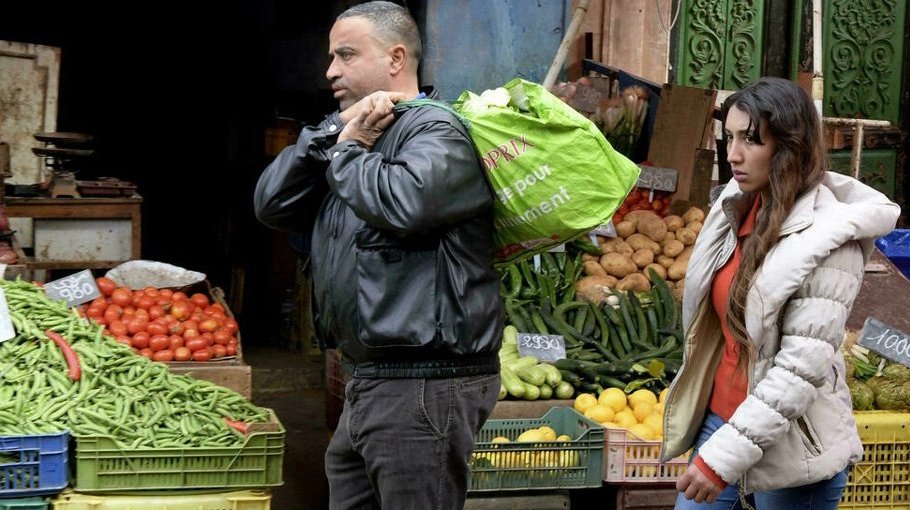
Every day at the family grocery stall in a Tunis market, Bilel Jani sees the reality of a biting economic crisis, which for many has overshadowed Tunisia's latest political turmoil.
"People here are poor," he said, handing a meagre bag of olives to a customer. "Most of our customers are living day-to-day. Monthly salaries these days don't even cover a week."
The small North African country, roiled by years of political turmoil that deepened with President Kais Saied's power grab last July, is also mired in a deep recession.
Surging prices and job losses have hurt families that were already struggling before the coronavirus pandemic.
This week, Tunisia started preliminary talks with the International Monetary Fund over a bailout package.
Such a deal would likely mean cuts to subsidies and public sector wages, which many fear would spell more suffering for the most vulnerable.
That could fuel the same kind of grievances that sparked a revolution a decade ago and brought down autocrat Zine El Abidine Ben Ali after 23 years in power.
The economic crisis since then has pushed tens of thousands of Tunisians to seek better lives overseas.
At the Halfaouine market in a winding street near central Tunis, Jani's customers are already feeling the pain.
"People used to buy by the kilogram," he said. "Now they just buy the absolute necessities."
His customer Delila Dridi said life was a struggle on her salary from the education ministry.
"I earn 1,000 dinars ($348, 305 euros) a month and I used to have 100 or 60 dinars left over at the end," she said. "Now I have to borrow to get to the end of the month."
Asked when things had started to deteriorate, she said "since Zine left".
Ben Ali had ruled with an iron fist. But in late 2010, in the neglected town of Sidi Bouzid, vegetable salesman Mohamed Bouazizi set himself on fire in desperate protest against police harassment.
That sparked a revolt which forced Ben Ali into exile and sparked the Arab Spring uprisings around the region.
But rather than addressing corruption and structural economic problems, the dysfunctional democracy that followed was torn by an ideological showdown between Islamists and secularists.
Successive governments staged hiring sprees to tamp down social unrest, inadvertently tripling the wage cost of Tunisia's public sector, one of the world's most bloated.
Little was done to help poorer regions in a country with vast wealth disparities, said Romdhane Ben Amor of the Tunisian Forum for Economic and Social Rights.