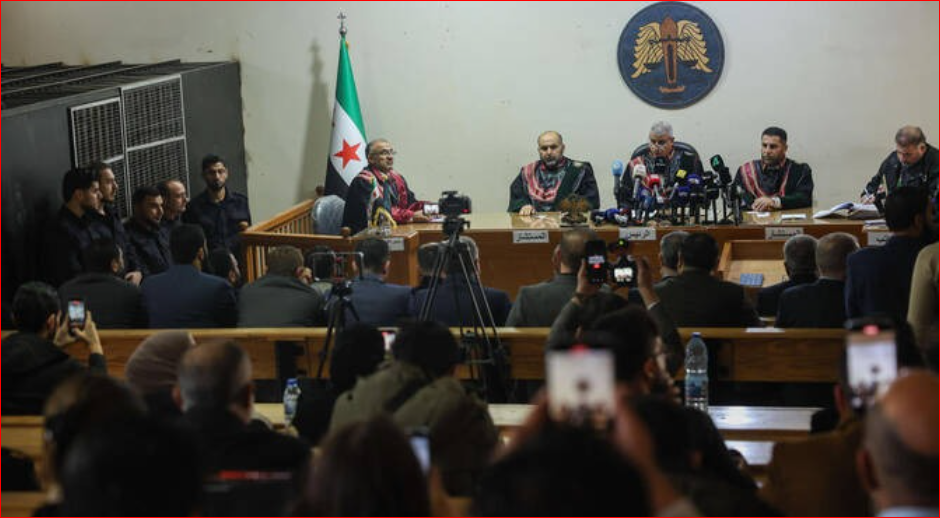
AP, ALEPPO, Syria: Syria opened its first public trial Tuesday for some of the hundreds of suspects linked to the deadly sectarian clashes that swept the country’s coastal provinces earlier this year. Fourteen individuals appeared before Aleppo’s Palace of Justice following a months-long investigation into the March violence, which involved clashes between government forces and supporters of ousted President Bashar Assad.
Of the 14 defendants, seven were Assad loyalists and seven were members of the new government’s security forces. The investigating committee referred 563 suspects to the judiciary in total. Charges could include sedition, inciting civil war, attacking security forces, murder, looting, and leading armed gangs, according to state media.
The clashes erupted after armed groups aligned with Assad ambushed the new government’s forces, triggering a counteroffensive that escalated into sectarian revenge attacks. Hundreds of civilians, mainly from the Alawite minority, were killed, adding pressure on interim President Ahmad al-Sharaa to demonstrate commitment to judicial reform and rebuild Syria’s international ties.
A state inquiry estimated over 1,400 deaths during the sectarian violence, though it found no evidence that Syria’s new military leaders ordered attacks on Alawite communities. A United Nations investigation, however, described the attacks on civilians by government-aligned factions as “widespread and systematic,” noting that Alawite men and boys were singled out for execution.
The trial was televised, but the judge adjourned the session, scheduling the next hearing for December. With hundreds of suspects involved, the proceedings are expected to be prolonged. Observers say the trial marks a key step for Syria’s new government to show accountability and adherence to judicial reforms after decades under Assad’s autocratic rule.
The government faces both domestic and international pressure to ensure a fair and transparent legal process while addressing the humanitarian and sectarian tensions left in the wake of the March violence.