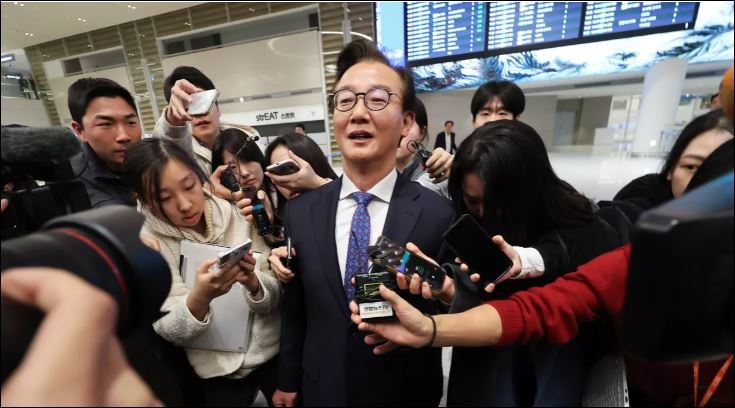
South Korea on Thursday indicted former acting president Choi Sang-mok on charges linked to the brief martial law declared by then-President Yoon Suk Yeol in December 2024, widening the list of senior officials facing legal action over the crisis.
Choi is among three top officials who temporarily led the government after Yoon was impeached and removed over the controversial martial law order, which triggered widespread political unrest. Yoon is currently in jail and standing trial on rebellion charges. Dozens of his officials and military commanders have been arrested, indicted or placed under investigation.
An independent investigation team led by special counsel Cho Eun-suk charged Choi with dereliction of duty for failing to fully restore the nine-member Constitutional Court while it was reviewing Yoon’s impeachment. Prosecutors say Choi filled two vacant seats but left a third unfilled, citing political gridlock, even though restoring the court could have strengthened the case for Yoon’s removal. The court later unanimously dismissed Yoon in April.
Assistant special prosecutor Park Ji-young said another former acting leader, Han Duck-soo, was also indicted Thursday on the same dereliction of duty charge. Han, who earlier faced accusations of helping legitimize Yoon’s martial law order by attempting to push it through a Cabinet Council meeting, has said he opposed the plan.
Five others, including Yoon’s justice minister, were indicted on various charges connected to the martial law episode. Prosecutors also brought perjury charges against Choi for testimony given during Han’s trial.
The probe into the martial law declaration is one of three independent investigations into Yoon, his wife and their associates. The inquiries were approved by current President Lee Jae Myung after he won a June snap election triggered by Yoon’s removal.
In August, Yoon’s wife, Kim Keon Hee, was arrested and indicted on financial and political corruption charges. Hak Ja Han, the 82-year-old Unification Church leader, was also arrested for allegedly ordering church officials to bribe a lawmaker close to Yoon.
The unfolding scandal has rattled the country’s political landscape, with local media reporting that other influential figures, including those aligned with the Lee administration, may have received money from the church.
Amid the growing scrutiny, Oceans Minister Chun Jae-soo on Thursday denied bribery allegations but submitted his resignation to avoid putting pressure on the administration. President Lee accepted his resignation later in the day.
Earlier this week, Lee urged a full investigation into alleged ties between politicians and a religious group, though he did not mention the Unification Church by name.