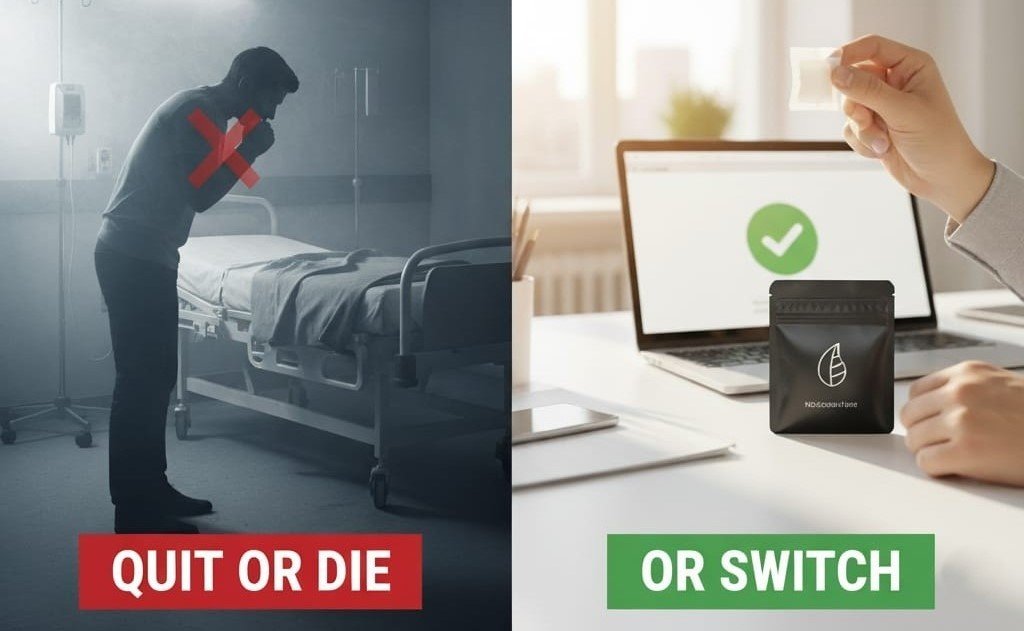
The growing debate around the illicit trade of tobacco products and safer alternatives in Bangladesh has highlighted two opposing perspectives. One side advocates for a pragmatic, balanced regulatory approach - similar to successful international models - that prioritizes public health while acknowledging market realities and providing smokers with safer, regulated options. The other, influenced by externally funded groups, calls for an outright ban on alternatives, disregarding local context and global evidence. Such an inflexible stance risks undermining Bangladesh’s progress in both public health policy and economic resilience.
Earlier this year, National Board of Revenue (NBR) Chairman Md Abdur Rahman Khan highlighted the significant tax losses Bangladesh faces from the illicit trade of tobacco products and safer alternatives. While not endorsing unrestricted promotion, he emphasized the need for balanced regulation over outright bans, noting that total prohibitions often drive consumers toward unregulated black markets - resulting in lost revenue and increased exposure to harmful products, as evidenced in countries like Australia, India, and Thailand.
Today, Bangladesh remains one of the countries most affected by tobacco use in Asia. National health data shows that over 35% of adults use some form of tobacco. Despite years of awareness campaigns, graphic warning labels, and tax measures, the grip of addiction has remained strong in the country.
Meanwhile, countries such as Saudi Arabia and the UAE are taking crucial steps in a major public health push aimed at helping smokers quit smoking in their respective countries. The Saudi Public Investment Fund (PIF) funded Badael, a smoking cessation company established in 2023, has scaled up its efforts to help 1 million people in the country quit smoking, through its flagship product, DZRT - a tobacco-free nicotine pouch aimed at helping smokers quit. In less than two years, the company has enabled nearly 400,000 smokers to transition away from cigarettes, with 140,000 of them reportedly quitting nicotine use altogether. This initiative aligns with Saudi Arabia’s long-term vision of achieving a tobacco-free nation, with government support for harm reduction as a credible approach to protecting public health and saving lives.
Similarly, the UAE has also made decisions to issue regulatory provisions for tobacco-free oral nicotine pouches, to help curb the smoking epidemic in the country. The UAE Ministry of Industry and Advanced Technology’s (MoIAT) decision to issue a technical standard for tobacco-free oral nicotine pouches reflects a strong commitment the government has towards public health and quality control.
Nicotine pouches provide a modern, smoke-free option that contains no tobacco, combustion, or smoke - eliminating most of the harmful chemicals associated with lung cancer, heart disease, and stroke. Growing global evidence supports the use of such regulated alternatives as an effective tool to help end the smoking epidemic.
Research from the Middle East and Europe shows that, when properly regulated and used, nicotine pouches are far less harmful than combustible cigarettes. In 2008, the WHO identified nine key toxicants in cigarette smoke while studies show that in tobacco free nicotine pouch products, these are reduced by more than 99 per cent.
Initial reports from Saudi Arabia indicate a decline in hospital visits for smoking-related illnesses, alongside increasing public acceptance of cessation tools that support individuals in overcoming addiction rather than penalizing them. According to a recent study conducted in the country to test the success of nicotine pouches, 41% participants who switched to nicotine pouch products successfully quit smoking.
Earlier this year the U.S. Food and Drug Administration authorized the marketing of ZYN nicotine pouch products in the country, stating that the FDA has sufficient evidence that the new products offer greater benefits to population health than risks. Matthew Farrelly, Ph.D., director of the Office of Science in the FDA’s Center for Tobacco Products said “In this case, the data show that these nicotine pouch products meet that bar by benefiting adults who use cigarettes and/or smokeless tobacco products and completely switch to these products”. Data from an extensive scientific review conducted by the FDA showed that nicotine pouch products benefitted adults who use cigarettes and/or smokeless tobacco products and completely switch to these products, far more greatly, than the risks the products posed, including towards the youth. “It’s critical that the manufacturer market these products responsibly to prevent youth use,” said Brian King, Ph.D., M.P.H., director of the FDA’s Center for Tobacco Products. “While current data show that youth use remains low, the FDA is closely monitoring the marketplace and is committed to taking action, as appropriate, to best protect public health”. To ensure proper regulation, the FDA permit only allowed these specific tobacco products to be legally marketed in the U.S. to adults 21 and older, thereby ensuring proper regulation of these products.
For Bangladesh, the regulated introduction of safer nicotine delivery systems such as nicotine pouches could strengthen existing tobacco control efforts and advance the nation’s goal of becoming tobacco-free. Drawing lessons from the UAE and Saudi Arabia’s balanced approach, Bangladesh now faces a pivotal policy choice - between adopting evidence-based, health-focused regulation that supports both well-being and economic growth, or following rigid, externally influenced policies that risk undermining sovereignty and enforcement. A forward-looking, people-centered strategy is essential - one that reduces harm, restores tax revenues, and empowers adults with safer alternatives for a healthier and more resilient future.