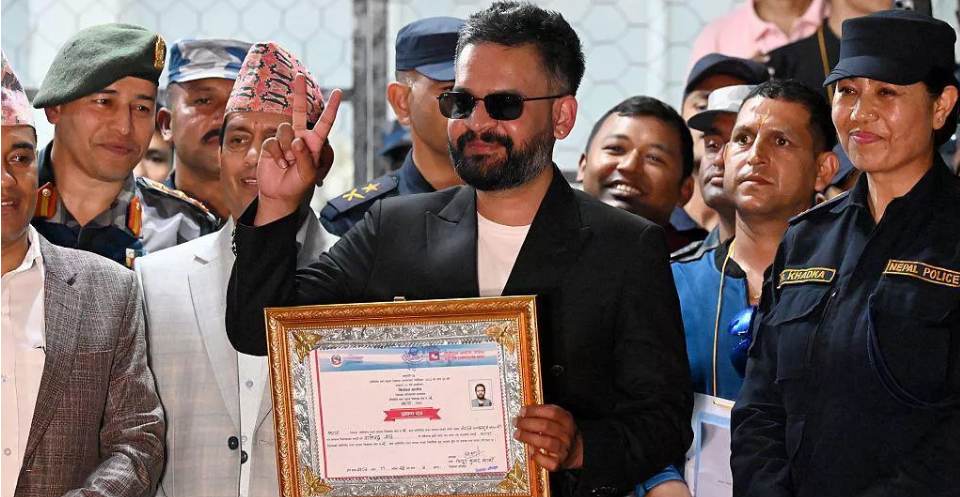
Counting in Nepal’s parliamentary elections is ongoing as the party of rapper-turned-politician and former Kathmandu mayor Balendra Shah is on track to secure a two-thirds majority, a historic outcome in the country’s dual-voting system.
Shah’s Rastriya Swatantra Party (RSP) has so far won 124 of 165 directly elected seats and 58 of 110 proportional representation seats, leaving it just two seats short of a supermajority. If achieved, it would mark the first time in decades that a single party dominates Nepal’s lower house.
The 35-year-old Shah also defeated four-time Prime Minister KP Sharma Oli in the Japha 5 constituency, a traditional stronghold of Oli’s Communist Party, while other RSP candidates beat senior leaders including Nepali Congress president Gagan Thapa. Supporters celebrated across the country, ringing bells – the RSP’s election symbol.
The elections follow deadly Gen Z protests six months ago over corruption, inequality, and elite rule that toppled Oli’s government. Analysts say the results reflect voters’ desire for political renewal and stronger governance.
Despite the landslide, constitutional changes remain limited as the upper house is separately elected. Nepal’s new parliament building, damaged and unfinished during the protests, is expected to host sessions by late March. International leaders, including Indian Prime Minister Narendra Modi, have congratulated Shah and the RSP.
The vote also brought record youth representation, with 12 lawmakers under 30 securing seats through direct elections, highlighting the growing influence of Nepal’s younger generation.