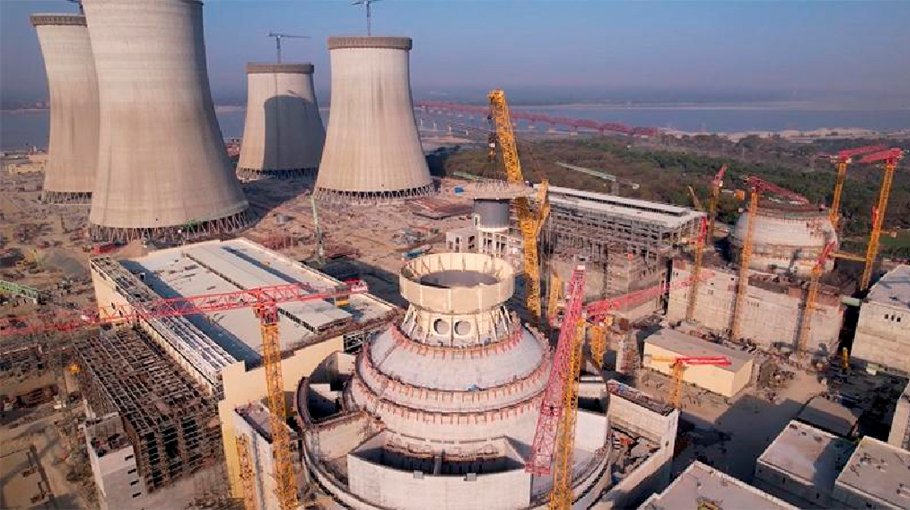
Bangladesh has signed the final acceptance protocol agreement on receiving the 'Initial Batch Fresh Nuclear Fuel' for Rooppur Nuclear Power Plant (RNPP) on Wednesday.
The agreement between the two countries was signed in Siberia.
After the first batch of the fuel, Bangladesh is getting two more batches of uranium for free from Russia Atomstroyexport as per the general agreement.
RNPP Project Director Dr Mohammad Shawkat Akbar signed the protocol on behalf of Bangladesh, while Alexey Deriy, vice president of JSC Atomstroyexport signed on behalf of the general contractor.
Bangladesh signed this protocol after completion of all formalities in manufacturing of the fuel at the factory and having acceptance from the inspecting team that includes manufacturers, sub-contractors, customers and contractors.
Dr Mohammad Shawkat Akbar said that with this agreement, Bangladesh has become the owner of nuclear fuel.
"Now we are waiting to receive the fuel and the first flight of fuel will arrive in Dhaka in between September and October this year," he added.
He said, after the first batch of the fuel, Bangladesh is getting two more batches of uranium for free from Russia Atomstroyexport as per the general agreement.
As per the project plan, the first unit of the 2,400MW nuclear power plant is expected to commence commercial operation in the first quarter of 2024.
The $13 billion project is being implemented by the Bangladesh Atomic Energy Commission with the technical and financial support of Russia.
The uranium, which is sourced from Russia, will be transported in a specially designed container aboard a dedicated aircraft to Dhaka's Hazrat Shahjalal International Airport.
Officials concerned said that the Bangladesh Army will supervise the transportation of the containers, filled with uranium, by road to Rooppur located in Ishwardi upazila of Pabna district.
Workers are being trained for this purpose, the sources said.
The two units of the Rooppur Nuclear Power Plant will require 70-80 tonnes of uranium annually, with uranium being loaded into the reactors every 18 months. Each kilogram of uranium will cost the government $550.
The International Atomic Energy Agency (IAEA) will oversee the entire operation to ensure its compliance with safety protocols.
Although the upfront cost of this plant is very high, the project's 60-year lifespan is expected to give a cheap and emission-free power supply in the long run.