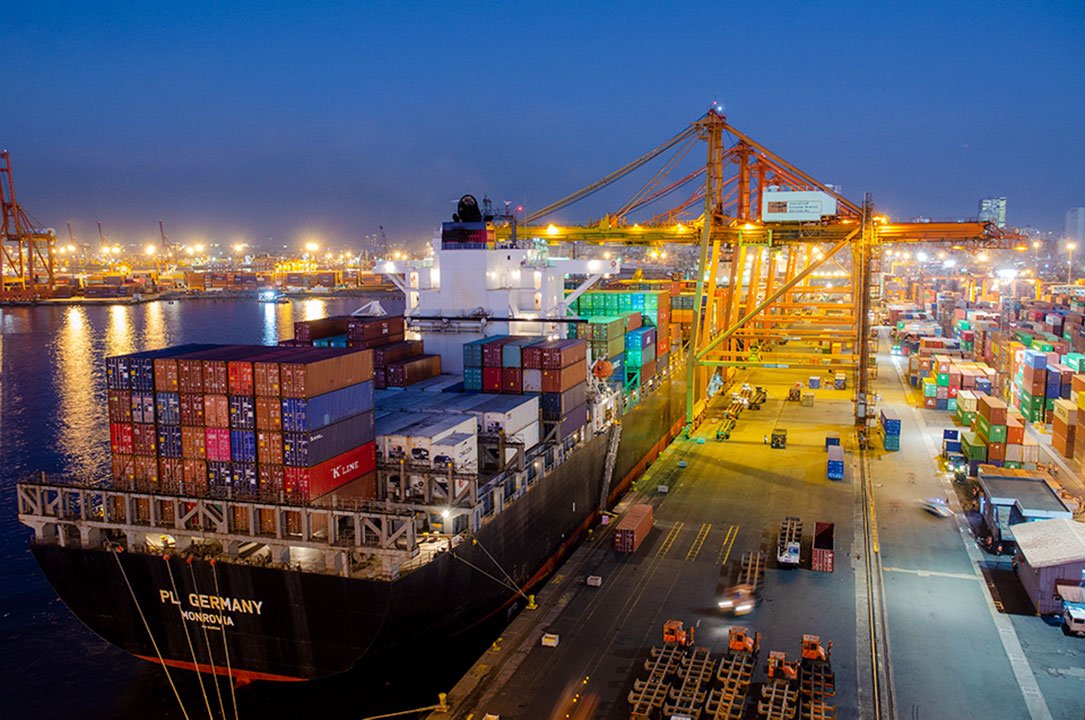
Bangladesh's merchandise imports climbed to their highest monthly level in three and a half years in April, signalling a possible revival in business activity as improving political stability and easing external pressures encourage fresh investment.
According to Bangladesh Bank data, businesses and entrepreneurs imported goods worth $7.07 billion during the month, up 21.4 percent from a year earlier. It was the first time since late 2022 that monthly imports crossed the $7 billion mark, reflecting renewed demand for capital machinery, industrial raw materials and other production-related goods.
The last time imports exceeded this level was in November 2022, when the monthly bill stood at $7.59 billion. Since then, import payments had largely remained between $5 billion and $6 billion, with only a few exceptions.
Economists, bankers and business leaders say the latest figures point to growing confidence among investors following the formation of the new government. They argue that greater political stability after the February election has encouraged businesses that had postponed expansion plans to resume investment and increase imports needed for production.
Data from the central bank also show that imports of intermediate goods, which include raw materials and components used in manufacturing, rose 8.23 percent year-on-year to $54.50 billion during the first 10 months of the fiscal year, compared with $50.35 billion in the corresponding period a year earlier.
Intermediate goods are essential for key export-oriented and domestic industries, including plastics, ready-made garments, jute and light engineering, making their increased import an important indicator of industrial activity.
Fuel imports also registered a sharp increase. Spending on fuel oil surged 72 percent to $7.64 billion during the July-April period, reflecting higher demand and import requirements.
However, imports linked to the country's largest export sector, the ready-made garment industry, moved in the opposite direction. Expenditure on these goods fell 7.2 percent to $14.56 billion during the first 10 months of the fiscal year from $15.70 billion in the same period of FY2025.
Bangladesh's import bill had remained subdued over the past few years as authorities imposed various measures to conserve foreign currency reserves amid a prolonged dollar shortage. The administration led by former prime minister Sheikh Hasina introduced restrictions to curb non-essential imports, significantly reducing overall spending.
The interim government headed by Muhammad Yunus largely maintained a similar policy stance after Hasina's ouster in August 2024 following a student-led mass uprising. During that period, businesses faced continued uncertainty and economic instability, prompting many investors to delay expansion plans.
Former World Bank Dhaka office chief economist Zahid Hussain believes conditions have improved since the February election, creating a more favourable environment for investment.
According to him, many entrepreneurs had been waiting for greater stability before committing fresh capital. With confidence gradually returning, they are now moving ahead with plans to establish new industries and expand existing operations, leading to increased imports of capital machinery and industrial inputs.
Mustafizur Rahman, distinguished fellow at the Centre for Policy Dialogue (CPD), echoed that assessment, saying stronger imports of machinery and production materials indicate rising investment activity.
He noted that the new government has completed four months in office with what he described as an encouraging start that has generated optimism among businesses. He also pointed to the recently unveiled national budget, which includes measures aimed at stimulating investment and accelerating economic growth, alongside Bangladesh Bank's announcement of a Tk 600 billion incentive fund to support industrial expansion.
The availability of low-interest financing from the fund is expected to encourage entrepreneurs to undertake new projects, he said, adding that another two or three months of data would provide a clearer picture of whether the upward trend in imports is sustainable.
Mustafizur also observed that the country's foreign exchange reserves have reached a relatively comfortable level, suggesting that higher imports are unlikely to pose major risks if the current trend continues.
Former Association of Bankers, Bangladesh (ABB) chairman and Mutual Trust Bank Managing Director Syed Mahbubur Rahman also described recent economic indicators as encouraging.
He said the easing of the dollar shortage, growth in foreign exchange reserves and the decision to allow the exchange rate to be more market-driven have improved overall conditions. The increase in imports of capital machinery and industrial raw materials, he added, suggests that the slowdown in investment is beginning to reverse and could help accelerate economic growth.
Despite the positive outlook, business leaders say financing costs remain a major concern.
Bangladesh Chamber of Industries President Anwar-Ul-Alam Chowdhury Parvez stressed that bank lending rates need to come down to sustain industrial investment.
He argued that entrepreneurs cannot reasonably expect to earn profits while borrowing at interest rates as high as 16 percent, making lower financing costs essential for encouraging business expansion and maintaining the momentum in imports and investment.