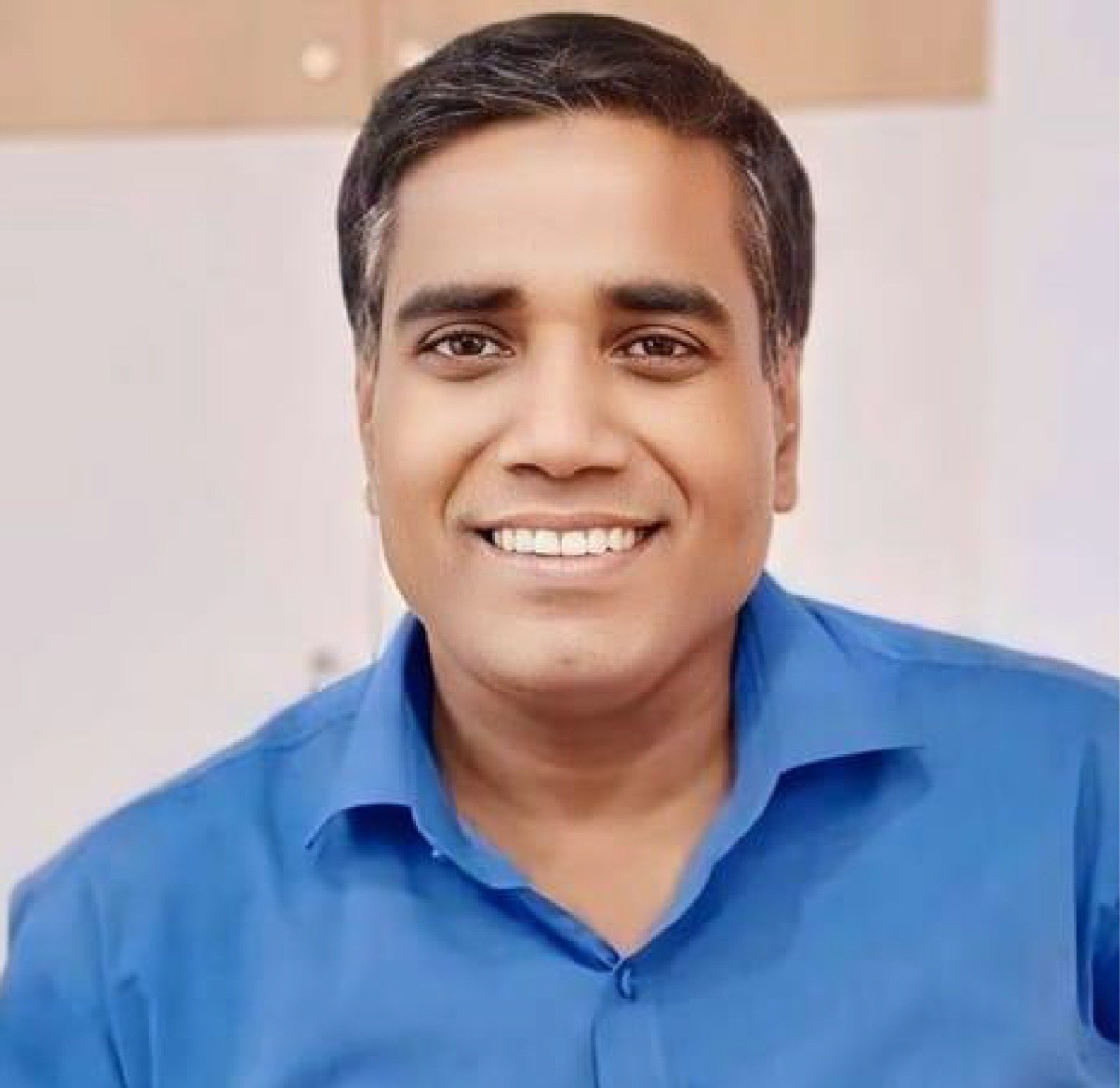
Mohammad Safiul Azam
Every year, thousands of young Bangladeshis enter the labour market with university degrees, academic knowledge and hopes of building successful careers. Yet as the world of work changes rapidly, an increasingly urgent question confronts us: Is a degree alone enough to prepare a young person for the jobs of the future? Increasingly, the answer depends not simply on what young people know, but on what they can do with that knowledge.
Technology is not only creating new professions; it is reshaping existing ones. Artificial intelligence is changing how an officer analyses data, how a researcher processes information, how a communications professional develops content, how a teacher prepares learning materials and how an entrepreneur understands customers and markets. AI is therefore no longer a specialised subject reserved for technology professionals. Its influence is spreading across almost every sector.
The changing global labour market makes the urgency clearer. The World Economic Forum’s Future of Jobs Report 2025 estimates that by 2030, around 92 million existing jobs could be displaced globally, while approximately 170 million new jobs could be created. The AI story, then, is not simply about machines replacing people. It is also about new jobs, new professions and, above all, new skill requirements.
For Bangladesh, the critical question is: How prepared are our young people for this changing labour market? Bangladesh has long viewed its large young population as a demographic advantage. But demographics alone do not guarantee an economic dividend. If young people enter the labour market without skills that match workplace demands, that potential can instead translate into unemployment, frustration and lost opportunity.
We therefore need to look beyond how many students receive degrees. We must also ask what they are learning, what problems they can solve and whether they can apply their knowledge in real workplaces. This requires rethinking the relationship between education and employment. If students encounter essential workplace technologies only after completing university and beginning a job search, a significant gap has already been created. Career readiness cannot be something added at the end of education. It needs to be developed throughout the learning process.
Preparing young people for an AI driven economy, however, does not mean simply teaching them to use a few popular AI tools. The platforms widely used today may change considerably within a few years. Education must therefore focus on lasting competencies rather than particular applications.
Young people should understand when AI can be useful, how to give it effective instructions, how to verify the information it produces and how to combine technological capabilities with human knowledge, creativity and judgment. The essential skill is not merely knowing how to use AI, but knowing how to work effectively, critically and responsibly with it.
This preparation should also begin before university. Age appropriate understanding of AI can start much earlier. At the secondary level, students can learn about safe use, information verification, digital responsibility and ethics. In higher education, AI can be connected more directly with research, data analysis, innovation, problem solving and career preparation.
What Bangladesh needs, therefore, is not a collection of disconnected training programmes, but a continuous pathway for AI learning and skills development. There are encouraging signs. A nationwide AI training programme of the Department of Youth Development received 103,996 applications, with 1,600 trainees expected to be selected from 64 districts in its second phase. The scale of interest sends an important message: young Bangladeshis recognise that these skills matter. The National University is also preparing to incorporate AI into Applied ICT learning at the undergraduate level. Initiatives are underway to train teachers in the use of AI in education and develop a pool of master trainers with technical support from Aspire to Innovate (a2i). The ICT Division and other government agencies are also pursuing initiatives to strengthen AI related skills.
Recently, I had the opportunity to attend an AI training programme for students at Noakhali Science and Technology University, organised with support from a2i. What stayed with me was not simply the technology being discussed, but the enthusiasm of the students. Their questions, curiosity and eagerness to understand how AI could support their studies and future careers were striking. That enthusiasm is encouraging, but it also reveals the scale of the challenge. Training a few thousand young people is valuable, but Bangladesh has millions preparing to enter the workforce. AI learning cannot remain dependent on occasional workshops or short term projects. AI literacy must gradually become part of mainstream education, technical training and workforce development.
Success should also not be measured only by the number of people trained or certificates distributed. We need to ask what happens afterwards. Can participants use their skills to solve real problems? Has the training improved their employability and productivity? Can they conduct better research, develop solutions or build businesses? These outcomes should increasingly become measures of success.
Responsible use is equally important. AI systems can produce inaccurate or misleading information, while the use of personal and institutional data raises concerns about privacy and security. In education, excessive dependence on AI can undermine academic integrity and genuine learning. Technical knowledge must therefore be accompanied by fact checking, source verification, data privacy, ethics and critical thinking.
Our objective should not be to create a generation dependent on technology, but one capable of using technology with judgment. AI skills should also not be viewed solely through the narrow lens of getting a job. Young people can use AI to address challenges in agriculture, healthcare, education, disaster management and public services. An entrepreneur can better understand customers and markets, while a researcher can analyse information more efficiently without surrendering human judgment to an algorithm. AI skills can therefore become part of Bangladesh’s broader capacity for innovation.
But these opportunities must not remain concentrated in Dhaka or among students at a few well resourced institutions. If access to AI skills is determined by geography, gender, income or educational background, technology could deepen existing inequalities rather than reduce them.
Learning opportunities must reach students in districts and upazilas, technical and vocational learners, women and young people from disadvantaged communities. Practical AI education, stronger teacher capacity, closer connections between educational institutions and industry, and opportunities to solve real local problems will all be important. Government, educational institutions and the private sector must also work within a more coordinated skills framework.
The national conversation, therefore, should not revolve only around how many jobs AI might replace. A more important question is: How well are we preparing our young people for the new jobs, professions and economic opportunities that AI will create?
Bangladesh cannot determine how quickly AI will advance globally. But we can determine how prepared our young people will be to respond. The choices we make today in education, skills development and access to technology will shape whether tomorrow’s youth remain passive followers of technological change or become active participants in shaping it.
With the right skills, judgment and opportunities, Bangladesh’s young people can do more than adapt to the AI era. They can create jobs, build businesses, improve services and develop solutions to problems that matter to their communities.
The future of work will inevitably be influenced by AI. The more important question is whether Bangladesh’s youth will simply experience that future, or have the skills and confidence to help shape it.
Mohammad Safiul Azam is a columnist and communications professional. He can be reached at safiul.azaam@gmail.com