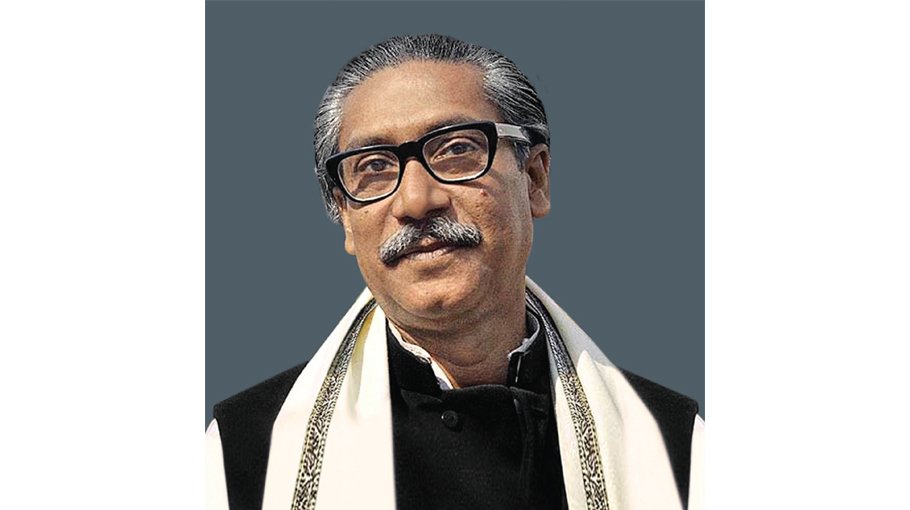
The 75th founding anniversary of ruling Awami League (AL), which led achieving country’s independence through the 1971 Great Liberation War, will be celebrated across the country today.
The party was established on June 23, 1949 as Awami Muslim League at Rose Garden in the capital’s old part. But, later it appeared as Bangladesh Awami League (AL) to have a secular look.
The Awami League is one of the oldest, non-communal, largest and leading political parties in the country. And the work of building a non-communal Bangladesh was first initiated by Father of the Nation Bangabandhu Sheikh Mujibur Rahman.
At the time of its establishment, Sheikh Mujibur Rahman was in jail and he was made joint general secretary of the party then.
The AL has taken elaborate programmes, marking its founding anniversary.
Earlier, the party’s General Secretary Obaidul Quader announced a three-day programme to celebrate the 75th founding anniversary.
All registered parties will be invited in the founding anniversary programme.
Prime Minister and party President Sheikh Hasina will inaugurate the platinum anniversary programme in front of Bangabandhu Bhaban today.
On the same day, a discussion meeting will be held at Suhrawardy Udyan at 3 pm followed by a cultural event.
Besides, a cultural programme will be held at Rabindra Sarobar and boat race and cycle rally will be arranged at Hatirjheel in the capital.
The founding anniversary of the country’s oldest political party will be celebrated at each union and ward as well. A-75-year long journey from Rose Garden to Ganabhaban.
The Bangladesh Awami League, the traditional and oldest political party, became a popular political party among the mass people in this part of the world by way of immense sacrifices and utmost dedication of Bangabandhu Sheikh Mujibur Rahman, who eventually became Bangabandhu and later Father of Independent Bangladesh.
Now AL is invariable and also an inseparable part of Bangalee nation as the history of the party means the story of struggle and glory of the Bangalees.
From the very beginning, Awami League has been leading the socio-political trend of the country amid different struggles and movements over the seven decades.
After the Liberation War, the party’s leader Father of the Nation Bangabandhu Sheikh Mujibur Rahman began to build Bangladesh with a non-communal spirit.
Following the footprints of her father’s ideology, Prime Minister Sheikh Hasina is taking ahead the country in an indomitable speed towards massive development and progress.
From Rose Garden to Ganabhaban
On June 23 in 1949, a new political party named Awami Muslim League was formed from a meeting of the supporters of Hussein Shaheed Suhrawardy at the Rose Garden situated in KM Das Lane, old Dhaka.
Coming out from Muslim League, progressive leaders and activists later formed Awami Muslim League.
It was the first opposition party in the then East Bengal (later renamed as East Pakistan).
Maulana Abdul Hamid Khan Bhashani and Shamsul Haq of Tangail became the party’s President and General Secretary respectively while Sheikh Mujibur Rahman, who was in jail, was made Joint Secretary.
In a process of secularization, the word ‘Muslim’ was later dropped from the name of the party.
Bangabandhu Sheikh Mujibur Rahman came to the leadership of Awami League in its 1966 Council.
Later, he became the unparalleled leader of Bangalee nation and architect of independent Bangladesh and Father of the Nation.
Awami League led the Mass Upsurge against the Pakistani occupation force in 1969, prompting it to join the Liberation War in 1971 to free the people from the centuries-old subordination.
Awami League became leaderless after the assassination of Bangabandhu and most of his family members on August 15, 1975 and killing of four national leaders inside the Dhaka Central Jail on November 3 in the same year.
Bangabandhu’s daughter Sheikh Hasina took the helm of Awami League after returning to the country in 1981.
She again united the party. She has been leading the party for three decades and formed the government four times side by side with waging different democratic movements.
After the independence, Awami League was in power around three and a half years before the assassination of Bangabandhu and five years from 1996 to 2001 under the leadership of Sheikh Hasina. The party is now running the country under the leadership of Sheikh Hasina after coming to power in 2009.
After the defeat in the 2001 general election, Awami League waged a successful movement against the then BNP-Jamaat led alliance government.
In 2007, the military-backed caretaker government declared a state of emergency. Awami League President Sheikh Hasina and top leaders of the party were arrested. As a result, the party was in crisis during that period.
But, overcoming all hurdles and hostilities, Awami League and grand alliance under the leadership of Sheikh Hasina achieved a landslide victory on December 29, 2008 national election.
On January 6, 2009, a grand alliance led by Awami League formed the government.
Sheikh Hasina became prime minister for the third time when Awami League formed the government after winning the January 5, 2014 general elections.
In the general election on December 30 in 2018, the people of Bangladesh again gave their absolute mandate to Awami League to form a government for a record third straight term.
In the general election on January 7 in 2024, the people of Bangladesh again gave their absolute mandate to Awami League to form a government for a record fourth straight term.
Awami League President Sheikh Hasina became the prime minister for the fifth time and fourth in a row.
As per the electoral pledges, Awami League government has been working relentlessly to build a poverty and hunger free, advanced and ICT- based, prosperous Bangladesh and thus to turn the country into a developed ‘Smart Bangladesh’ by 2041.