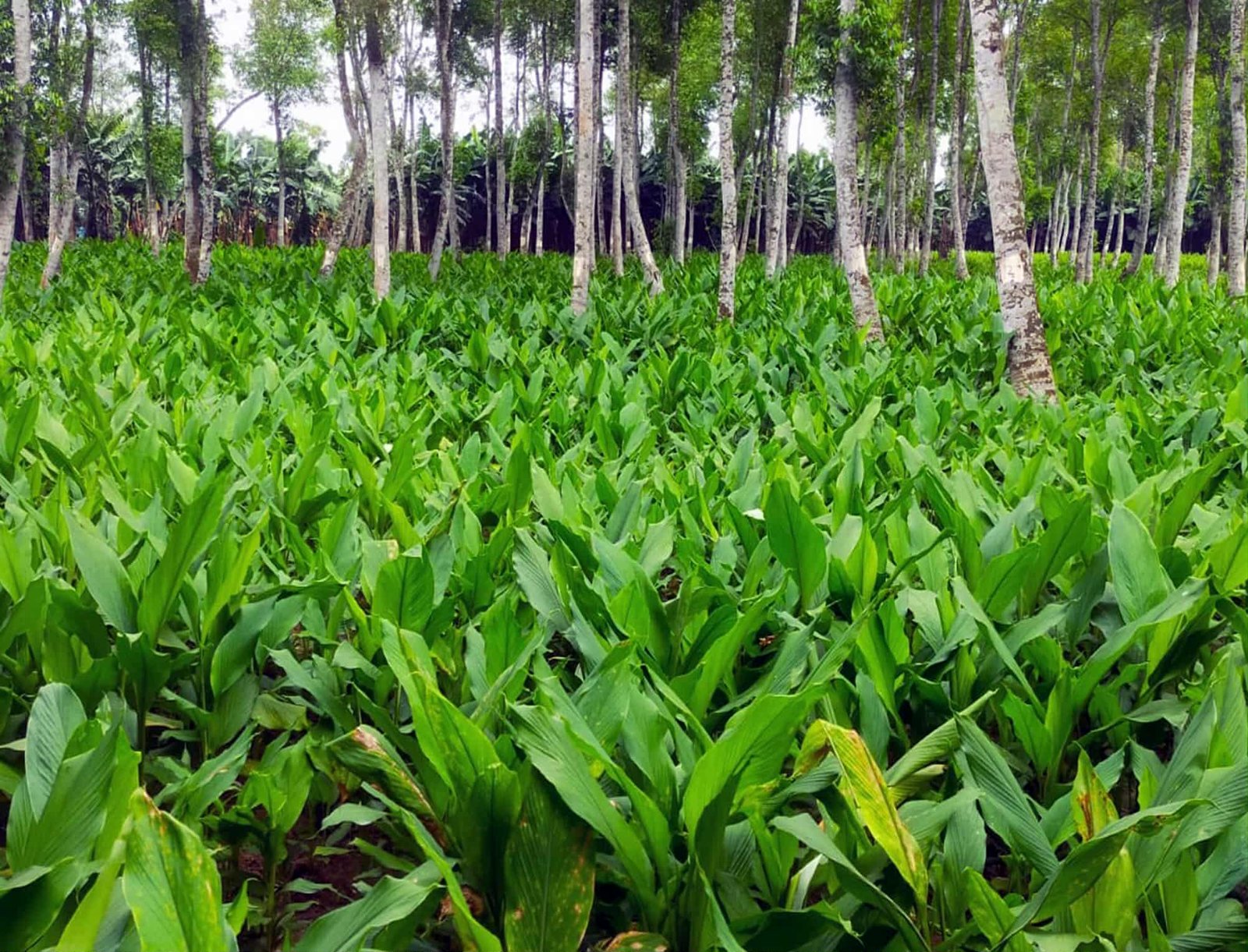
Farmers in Tangail’s Ghatail, Madhupur, and Sakhipur upazilas are beginning to see new hope through the cultivation of turmeric, a popular spice crop. Due to its low production costs, minimal pest issues, and high profitability, turmeric farming is gaining popularity across the region.
According to local farmers, turmeric is especially profitable when cultivated as an intercrop in hilly areas. It typically requires an investment of around Tk 35,000–40,000 per bigha, and if the yield is good, profits can range from Tk 60,000 to 80,000 per bigha.
Madhupur farmers Rezaul Karim, Akhtar Hossain, and Nazrul Islam shared that turmeric is easier to maintain than other crops and offers higher returns. Barring major natural disasters such as floods or droughts, they expect a good harvest this year.
In Madhupur alone, turmeric has been cultivated on 980 hectares of land, with an expected yield of around 12,000 metric tons. Last year, 760 hectares produced 9,000 tons, and the Department of Agricultural Extension expects even higher output this season, estimating sales worth around Tk 58 crore.
Across Tangail, turmeric is cultivated on a total of 3,208 hectares—Ghatail (1,456 ha), Madhupur (980 ha), and Sakhipur (350 ha) are the leading areas.
Experts say loamy and sandy-loam red soil is ideal for turmeric. It also thrives in warm and humid climates, especially in shaded or hilly areas. High-yield varieties like ‘Dimla’ and ‘Sindhuri’ produce 2–3 times more than local varieties and have better resistance to disease.
Turmeric is used not only in cooking but also in cosmetics, dyeing, and pharmaceuticals. It is rich in fibre, potassium, vitamins B6 and C, and curcumin—a compound known for its medicinal properties.
Madhupur Upazila Agriculture Officer Rokib Al Rana noted that turmeric’s year-round cultivation cycle makes it an attractive intercrop. Tangail District Training Officer Mohammad Dulal Uddin added that, with favourable weather, a bumper harvest is expected this year.