
Ahsan H. Tutul
Can you imagine living in a country where your history goes unrecognized, your culture is ignored, and your identity is hardly acknowledged? How would you feel in such a place? Simply put, it wouldn't make you happy at all. Unfortunately, this is the painful reality for Indigenous children in Bangladesh. As an essential part of the nation’s heritage and fabric, their stories are often absent from our textbooks, leaving them disconnected from their roots and preventing others from understanding the country's true diversity. To build an inclusive Bangladesh, it is not just necessary—it's crucial—that Indigenous studies become a core part of the national curriculum for everyone. The time to act is now, because every day that passes without this inclusion risks further alienating a significant part of our population. We cannot afford to delay this vital change any longer.
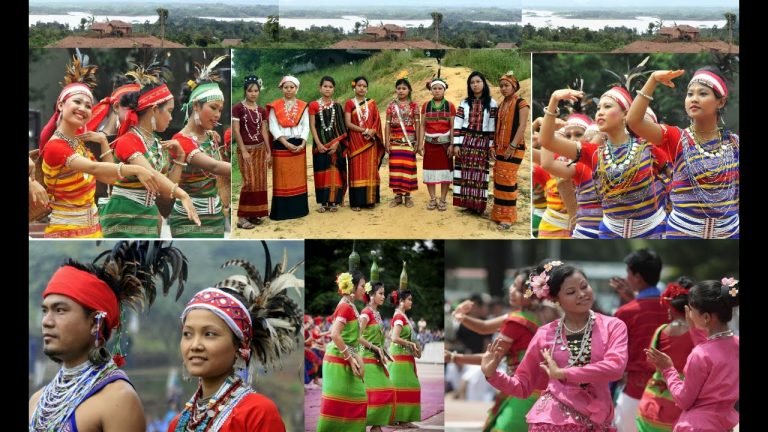
Bangladesh is a diverse country, with over 54 Indigenous groups, speaking more than 35 languages, and maintaining their customs and traditions. From the Chakma and Marma in the Chittagong Hill Tracts (CHT) to the Santal and Garo in the plains, it is estimated that about 3 million Indigenous people live here. Nevertheless, their stories and accomplishments are largely missing from our schooling. Textbooks mostly tell the story of Bengali culture, leaving Indigenous people unheard. Therefore, it causes a significant misunderstanding about the actual composition of our country.
Skirting Indigenous views in the school system is just one part of a bigger issue of discounting them. For example, in the past, Indigenous groups and their cultures were perceived as secondary to the primary Bengali culture. This continued to happen even after Bangladesh gained independence. Furthermore, the CHT is home to a substantial number of the Indigenous population. However, their situations deteriorated sharply there when their land and resources were taken by the Bengali people, often due to the government's callousness. The area, therefore, has been a contentious zone for years, where the Indigenous people seek greater control over their affairs and perceive Bengalis as intruders. Although the 1997 Peace Accord aimed at addressing these issues, the promises made have not been fulfilled in practical terms.
In countries such as Canada and New Zealand, initiatives have been implemented to make it mandatory in their school curricula to teach the history of Indigenous peoples, so that children grow up with an understanding of the cultural diversity of their countries. Similarly, Bangladesh should do so, because what we learn in school shapes our views. By including Indigenous people's histories, cultures, and achievements in textbooks, the government would help non-Indigenous students become more sensitive to Indigenous children and learn from them. For Indigenous children, understanding their history and culture in school would make them feel confident and secure about who they are and their sense of belonging. This change will not only rectify past injustices but also lay the groundwork for a more harmonious and understanding society.
Moreover, cooperation and community sharing are fundamental values among Indigenous peoples, along with decision-making models that favor collective interests over individual ones. Reflecting the community-sharing ethos of Indigenous groups, Bengalis in CHT, therefore, should also be acknowledged as community members, not intruders, enabling them to live free from discrimination and prejudice. Promoting harmonious relationships among all Bangladesh citizens in CHT is crucial for respectful coexistence. These principles should also be highlighted in educational curricula.
Indigenous knowledge has a lot to offer us. For example, rural communities in the CHT have been practicing environmentally sustainable agriculture and natural resource management for many years. These practices, if integrated into mainstream education, can provide practical solutions for problems such as deforestation, soil erosion, and global warming. As Bangladesh faces rapid urbanization and climate change, traditional practices offer a unique perspective on addressing these challenges. By incorporating these practices into our education system, we will not only preserve our heritage but also equip our future generations with the tools to tackle pressing environmental issues.
The government should act quickly to make Indigenous studies a mandatory subject for students in board exams, including those for English-medium O and A-level tests. This effort begins with updating textbooks and school materials to ensure an accurate portrayal of Indigenous peoples. The government, as the custodian of our education system, also needs to support training teachers to teach Indigenous subjects effectively. Moreover, the government must work to preserve Indigenous languages, which are at risk of extinction. These languages carry centuries of knowledge and culture, and their preservation is vital for maintaining our cultural diversity. By safeguarding these languages, the government will fulfill its responsibility to honor our history and enrich our present and future. With the government's commitment and support, we can bring about this necessary and transformative change.
Integrating Indigenous studies into the education system is not just about achieving historical accuracy but is also a vital step toward creating a more inclusive future for everyone. In doing so, the government will foster a nation where all people of Bangladesh are treated with dignity and respect. Therefore, this is Bangladesh's moment of truth—a time to correct the mistake of neglecting its Indigenous citizens and to develop an education system that truly reflects the country's diversity. The time is now to acknowledge that all children should learn about the rich cultural diversity that makes up a truly representative Bangladesh. Only then can we move forward together in harmony, heal old wounds, and value all our people. The urgency of this issue cannot be overstated, and the time to act is now.
The author is a doctoral researcher in International Relations at Universiti Sains Malaysia (USM). He can be reached at Ahsanh123@yahoo.ca