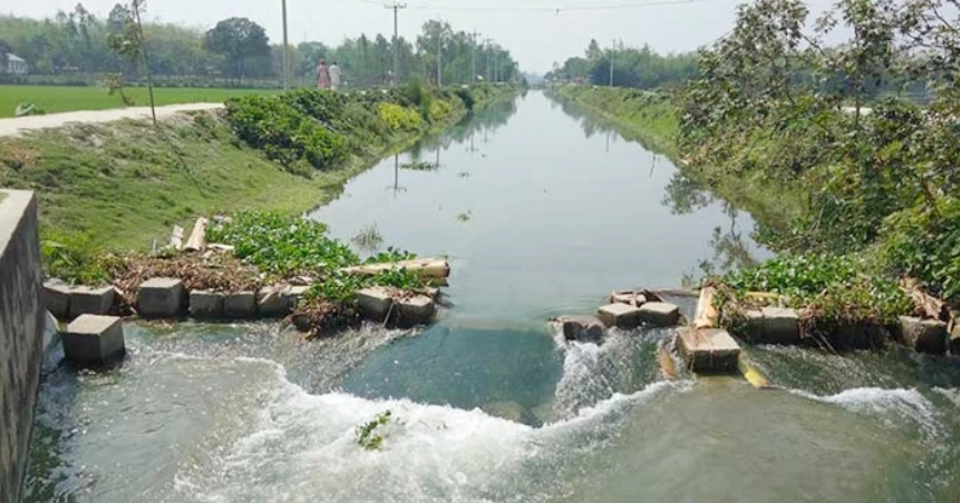
UNB:: The Teesta Irrigation Project has emerged as a blessing for farmers across four northern districts, ensuring uninterrupted irrigation during the ongoing Boro season when many parts of the country are struggling with fuel and electricity disruptions.
Farmers in Rangpur, Nilphamari, Dinajpur and Bogura say the project has brought relief by providing affordable and reliable irrigation water, boosting hopes of higher crop production this season.
Officials say the project has also helped save nearly Tk 60 crore in diesel costs, reducing dependence on fuel-powered irrigation amid the ongoing energy constraints.
According to the Water Development Board, Rangpur zone, about 10 lakh farmers are currently benefiting from the project, which has ensured uninterrupted irrigation across the region without major disruptions.
“Farmers are getting water smoothly through the Teesta project, which has reduced irrigation costs significantly,” said Mizanur Rahman, Superintending Engineer of Bangladesh Water Development Board, Rangpur.
He said the availability of water through the system is also helping improve soil fertility, further encouraging farmers to expand cultivation every year.
Officials said around 88,000 hectares of land across 12 upazilas in four districts have come under irrigation coverage this Boro season.
Under the system, 32,000 hectares in Nilphamari, 6,000 hectares in Dinajpur, 23,000 hectares in Bogura and 27,000 hectares in Rangpur district are being irrigated through canals fed by water from the Teesta River.
Field visits show water from the river is being channelled through a network of canals, including a 10-kilometre canal from Sayrabari to Bakpur in Gangachara upazila, irrigating around 130 acres of farmland.
Currently, around 8,000-9,000 cusecs of water are flowing in the river, compared to only 3,000 cusecs during the same period last year.
Local farmers say the project has drastically reduced irrigation costs. Abdus Salam, a farmer from Gangachara’s Borobil union, said irrigating one acre of land now costs only Tk 1,200-1,500 under the project, compared to nearly Tk 10,000 using other sources.
He also expressed hope for yields of 85-90 maunds per acre this season.
Farmers say the silt carried by Teesta water helps improve soil fertility and reduces the need for chemical fertilisers. Shahjahan Ali, general secretary of a local water management group, said this natural process increases productivity, with yields rising by 3-4 maunds per bigha compared to other irrigation systems.
However, farmers also pointed out several challenges, including delayed water supply before February, forcing them to depend on alternative sources for seedbed preparation.
They also cited issues such as rodent damage in earthen canals and difficulties in supplying water to uneven land.
In Nilphamari’s Kishoreganj upazila, canal renovation work has temporarily disrupted water supply in some areas, prompting locals to demand earlier and uninterrupted distribution from January.
Despite the limitations, farmers and officials remain optimistic. They say if Teesta is properly dredged and canal flow is improved, agricultural output in the region could increase significantly.
Authorities, however, noted that irrigation timing varies due to different crops such as rice, tobacco and maize. They also said ongoing canal maintenance has limited further expansion this season, but water supply is expected to continue for the next two months.