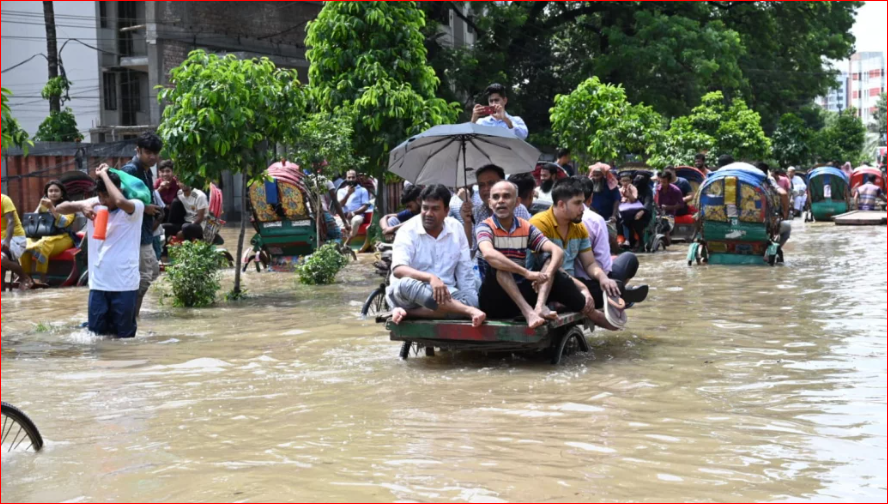
Waterlogging has become a perennial problem in the densely populated capital city of Dhaka. The mega city, which is grappling with nagging traffic congestion, faces waterlogging every year during monsoon. Sufferings of the city dwellers, particularly commuters, know no bounds due to rain-triggered waterlogging. Many roads and intersections in different parts of the capital go under water after heavy shower, multiplying the plight of commuters. Waterlogging also has social, economic, environmental and health impact on the city dwellers.
City people have long been demanding that the authorities concerned take urgent measures to end waterlogging in the capital, but they (authorities) appear to have turned a blind eye to the problem. Nobody knows when city people will get rid of waterlogging as there is no tangible steps in sight to end the problem.
A spell of heavy rain early Monday submerged different areas and roads in the capital, causing untold sufferings to the city people. The waterlogging caused by rain also exposed the city’s poor drainage.
Waterlogging inflicts social, physical, economic and environmental costs, especially during heavy downpours. The city areas, which face waterlogging after rain, include Mouchak, Malibagh, Dhanmondi, Mohammadpur, Kalabagan, Karwan Bazar, Green Road, Monipuripara, New Market, Asad Gate, Jigatola, Shewarapara, Kazipara and several other neighborhoods.
Experts point to the unplanned urbanisation, encroachment and filling of natural canals and poor drainage system are the main reasons for nagging waterlogging in many areas in the city.
A lack of coordination among the agencies concerned coupled with the negligence by the city corporation in maintenance of drains and delay in construction of new drains is also blamed for waterlogging, they said.
Urban planners say that sustainable drainage is essential for sustainable development as it reduces the impact of heavy rainfall and surface runoff. Since drainage links to other utilities, a well-functioning system can help improve other services.
According to a study conducted by the River and Delta Research Centre (RDRC) in 2024, excavation of just 15 canals could address 80 percent of the city’s waterlogging problem. The study recommend excavation of different canals to ease waterlogging in the capital. The canals include Rupnagar Main Khal, Baunia Khal, Baishteki Khal, Sangabadik Colonoy Khal, Kalyanpur Khan, Ibrahimpur Khal, Panthopath Box Culvert Khal, Rayebazar Khal, JIrani Khal, the sound end of Rampura Khal, Dolai Khal Khal, Kadamtali Khal and Manda Khal.
Taking into account the sufferings of people, we hope the government and other agencies concerned will do everything necessary and work in a coordinated way to prevent waterlogging in the capital and make the city livable.
To mitigate the water logging problem, widening the drainage system, regular cleaning of the drains and awareness of the inhabitants are required to achieve the goal.