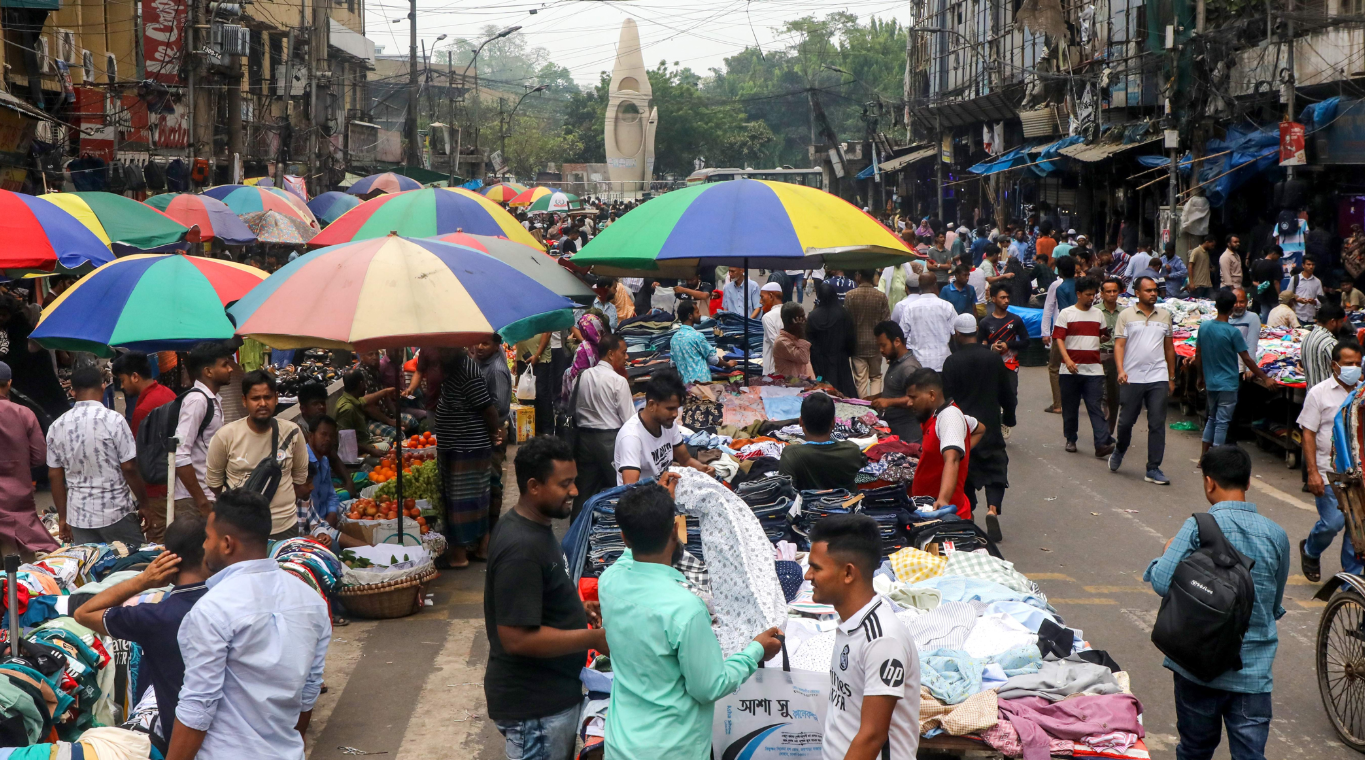
It takes only 12 days for the hawkers to reoccupy the footpaths after a massive drive by Dhaka Metropolitan Police (DMP) to reclaim footpaths and roads encroached by the hawkers across the capital. Almost similar drives were made in the capital at different times in the past to evict the hawkers who encroached pavements and roads in the city. But the crackdowns went into futility as the hawkers had the last laugh and reoccupied the footpaths just a few days after the drive.
People do not understand why such drives are launched if the authorities concerned fail to sustain their effect. Experts feel the informal mechanism keeping hawkers in the streets is still in full swing, as they are reportedly paying tolls to so-called linemen.
Hawkers have already resumed operations, reoccupying footpaths and roads in the capital. Both sides of the road and adjacent footpaths in almost all areas have once again fallen under the control of hawkers. Many hawkers have setup makeshift stalls using cloth and plastic so they can quickly move during drives, while others operate more permanently. The hawkers say that they are running their businesses at risk, as there is no alternative. They pay TK 100 as toll to linemen, though business has become uncertain, they said. They further say that they depend on the trade for their livelihoods and fear that eviction without rehabilitation will leave them without income.
Hawker leaders warned that eviction without rehabilitation raises concerns about how such a large number of people will survive. Dhaka south city corporation administrator said unregulated roadside business causing public suffering will not be allowed, but authorities do not want to act inhumanely toward hawkers and rickshaw pullers. According to him, a licence will be required to run temporary businesses on sidewalks.
It augurs well that the authorities are preparing a location-based list of hawkers. A specific number of hawkers will be allowed to operate in designated areas at fixed times. There are also plans to introduce “Holiday Markets” and “Night Markets”. The authorities said, “We aim not to evict, but to rehabilitate”. Dhaka north city corporation authorities said a token system will be introduced to prevent extrusion. Diving out hawkers from footpaths without holding extortionists accountable and without first arranging an alternative space or employment for hawkers defeats the purpose of such drives. Eviction drives will not be sustainable without a comprehensive plan, including clear policies and laws for hawker management. While recent drives have brought temporary relief, the need for alternative employment and poverty reduction measures, along with action against syndicates controlling footpath businesses and extorsion networks. Without addressing these root causes, such drives are unlikely to succeed in the long term, experts opine.
We, therefore, urge the government to adopt a comprehensive approach, ensuring rehabilitation, alternative employment, and social protection for the urban hawkers. Dhaka still lacks an effective legal frame work for hawker management, allowing syndicates to operate behind the scenes. Besides, people benefiting from extortion on hawkers must be brought under the law.