With the rapid development, implementation of technological tools and ICT in the age of flux, along with the globalization and specialization, the holistic nature of education is being fragmented. To reunite the fragmented education and to encourage a collaborative approach, to meet the demands of the 21st century life, living and workplace, the need for STEM education is not over emphasized. Coordinated education in Science, Engineering, Technology and Mathematics (STEM) is believed to have the capability to bridge this gap. The STEM concept stands for collaboration for innovation and leadership and is widely regarded that a strong STEM education program can facilitate economic development, job creation, and development of skilled manpower. Critical thinking, problem solving, collaboration, literacy in science and ICT etc are the skills, required for the global workforce today. STEM education is perceived to be the means to impart these skills on the future work force and our young generation. For enabling them to discover their true potential they will need to understand the connectivity and interrelation between science, technology, engineering and mathematics (STEM).
One of the greatest advantages that Bangladesh has at this crucial point of time is heryoung and working age manpower. To turn this huge manpower into an asset, STEM education can play a vital role. The job market of the present global economy requires a variety of new set of skills, most of which are related to science, engineering and technological skills and they are interrelated. Many countries with huge population have a major unemployment problem, especially where the population does not possess the required set of contemporary skills.
Though Bangladesh has a huge workforce, yet there is a significant lag in the demand and supply of needed skills among the youth for them to be successful in the global job market of 21st century. In the developed countries, STEM education is found to be reducing this gap and aligning with the demand and supply of necessary skills.
Development in Bangladesh and STEM education
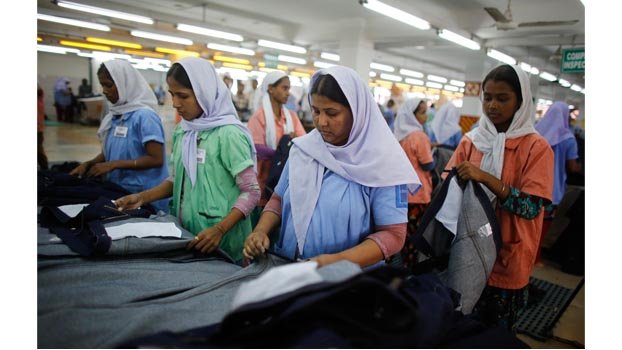
Bangladesh with its big workforce is projected to have a very high economic growth rate in the coming decades and expected to be one of the largest in the world. The national and global demand can be met with skilled manpower i.e. people with knowledge in math, science, engineering and technology and have a positive impact in the growth. Are we really ready to meet the demand of the 21 st Century? The answer, unfortunately, is “No”. There will be a significant shortfall of skilled workers that will be required in the coming decades unless we invest heavily in STEM education now. STEM education can be a critically contributing factor to provide constant and adequate supply of such skilled workforce in Bangladesh. We need to realize the fact that science and technological development is the most effective way of enabling a developing country such as Bangladesh to enter the realm of the developed and advanced world. Let us take the example of manufacturing industry of Bangladesh, which is playing and will continue to play a crucial role in realizing the projected industrial growth. Workforce with a certain level of science and technical skills are required for the growth of the manufacturing sector, which gradually becoming dependent on automation and being digitized. However, STEM spirit also requires humanitarian aspects of education. Without Humanities and social subjects, STEM cannot build a strong platform for the creation of a knowledge-based global society.
Vision of Bangabandhu
The Father of the nation, Bangabandhu Sheikh Mujibur Rahman, in his life-long journey to establish a happy and prosperous Bangladesh, had given intense emphasis for a science and technology based education system. The Government of Bangladesh, under the pragmatic leadership of Prime Minister Sheikh Hasina, has already made significant progress in lifting the education system to a new height of science and technology. The government is working firmly to make the country into Digital Bangladesh and has also taken initiatives such as digital schools, incorporation of ICT subjects in secondary levels, use of multimedia classrooms, all of which require professional development of the teachers however, interdisciplinary and cross disciplinary mind set is yet to be instilled on them.
which is the modern version of Sonar Bangla that was envisioned by the Father of the Nation. According to a report by the United Nations, STEM education can remove poverty and reduce inequality in developing countries, which was the dream of the Father of the nation. It is the ultimate objective of bdSTEM society to work in a multifaceted manner towards achieving that goal.Development of STEM infrastructure Adequate numbers of educational institutes of various levels have already been operationalized.
One of the major challenges of the Bangladesh government today is to ensure a quality education system befitting the new generation for the development of a skilled workforce. A major reform in the education system is required in order to achieve that. The general people, the educators and the policymakers need to realize that this country does not need unemployed youth with tertiary level bachelor and Master degrees. The STEM initiatives must start from the school level, and need to develop ways so that the young minds are attracted towards science, mathematics and technical subjects and pursue them to make themselves eligible and competitive in the local and global market.
Choice of subjects or the type of education a child gets should not be forced upon them. There is no dearth of teachers with tertiary level degrees in the schools but there is considerable shortage of trained teachers in the secondary and higher secondary education levels of Bangladesh with an adequate capacity of teaching the STEM subjects.
Mission of bdSTEM In line with vision of the Father of the Nation and operational strategy of the honorable Prime Minister, the following activities are being focused by the Bangladesh STEM Society (bdSTEM) to carry forward in the near future:
To work very closely with the government in the process of developing a STEM-focused educational system in Bangladesh and to provide necessary support to the relevant government agencies to introduce STEM in the national curricula and syllabus in a systematic manner.
Facilitate a regular training program in developed countries with an established STEM training program for a group of most eligible University faculty members for the next few years. These trainees will in turn train the local teachers/trainers at various levels.
Arrange regular “STEM Festival” in the educational institutions nationwide to build awareness on the STEM and encourage young generation, especially the students in the primary and secondary level to get interested in STEM through fun activities and competition.
It is, therefore, essential to facilitate high-quality training to our university-level educators in the countries with strong STEM programs, who will in turn train the local participants in Bangladesh from other levels in the education system. This is the time the government extends its hand to support these training programs, both overseas and locally and get ready to face the challenges.
Dr Al-Nakib Chowdhury is the convener, bdSTEM and Professor of Chemistry, BUET