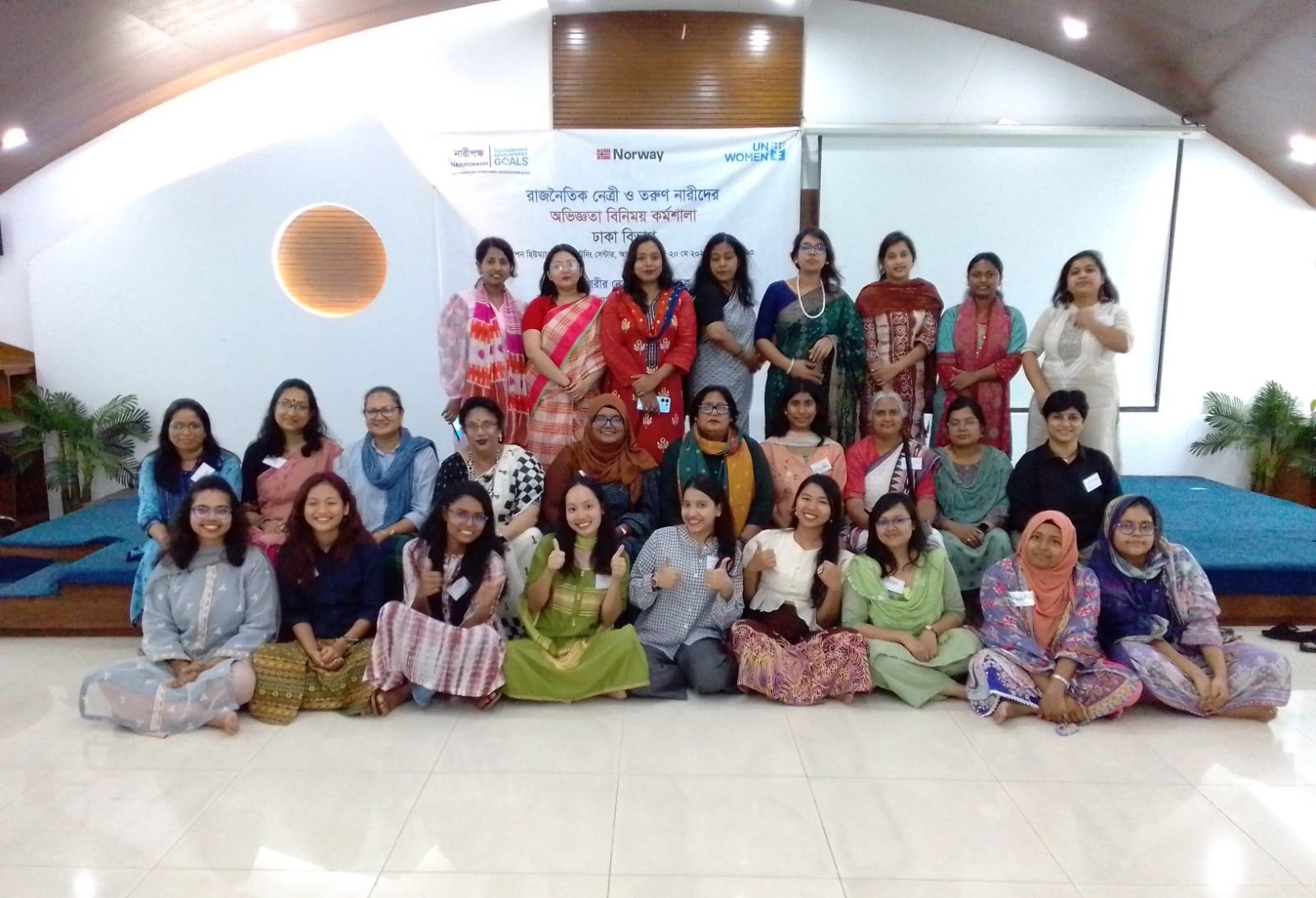
A cross-party experience-sharing workshop focusing on women’s leadership development and the role of political leaders in achieving Sustainable Development Goal (SDG)-16 was held in the capital on Wednesday.
The daylong workshop was organised by Naripokkho under the project titled “Enhancing Women’s Participation and Leadership in Public Life” at the Uddipan Human Resource Training Centre in Adabor.
Young women, mentors, political leaders and representatives of civil society participated in the programme.
The workshop was inaugurated by project director Nasima Akter, who said the main objective of the initiative was to build effective relationships and networks between emerging and experienced women leaders.
Former president and current member of Naripokkho Amita De and member Samia Afrin were also present.
During the discussions, young participants highlighted various challenges and opportunities related to women’s leadership development, while experienced political leaders shared their experiences regarding women’s participation in politics and leadership in public life.
Speakers stressed the importance of building inclusive, transparent, accountable and democratic institutions for implementing SDG-16.
They said ensuring women’s active political participation and representation in decision-making processes is essential for establishing peace, justice and strong institutions.
The workshop also discussed different aspects of Bangladesh’s women development policy, including equal opportunities in education and employment, political participation, economic empowerment and prevention of violence against women.
Participants also discussed 443 recommendations made by the Women Reform Commission to ensure women’s rights and participation.
In group discussions, participants identified economic barriers, patriarchal attitudes, misuse of social media, cyber insecurity and lack of political awareness as major obstacles to women’s leadership development.
They also highlighted skills development, accountability, democratic practices, women-friendly environments and interparty cooperation as important opportunities for promoting female leadership.
At the concluding session, participants adopted a joint action plan that included proposals for interparty dialogue, youth leadership development, networking, policy dialogue with the Election Commission, seminars and issue-based programmes.
Project director Nasima Akter thanked the participants and formally concluded the workshop.