Hassan Al-Mustafa
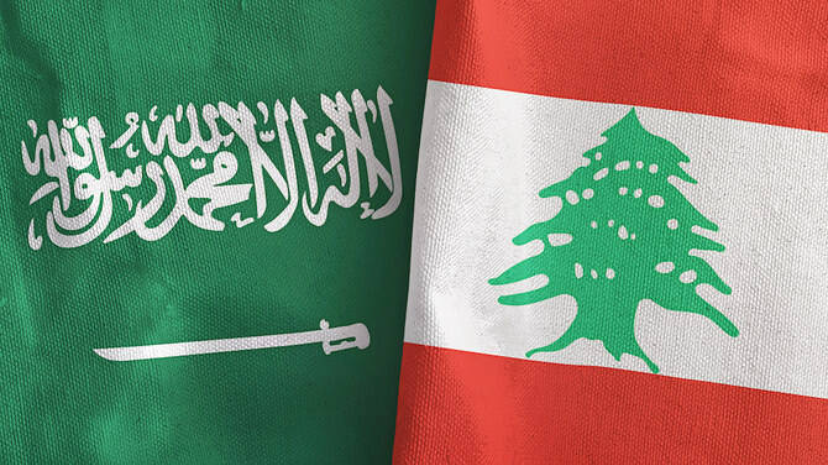
The Saudi Ministry of Foreign Affairs’ April 16 statement welcoming the US president’s ceasefire announcement in Lebanon was more than diplomatic formality — it provided a significant political boost to efforts to consolidate the ceasefire as a gateway to achieving internal security in Lebanon, strengthening the state and its institutions, and enabling the army to extend its sovereignty across all Lebanese territory.
This entails two crucial points: the withdrawal of Israeli forces from occupied areas and the placing of all weapons under the authority of the army and security forces. In other words, Hezbollah must surrender its arms to the state and transform into a political party operating within the law, on equal footing with the other Lebanese parties.
In its statement on Lebanon, the Saudi Ministry of Foreign Affairs praised the significant and positive role of the Lebanese leaders, including President Joseph Aoun, Prime Minister Nawaf Salam and parliament Speaker Nabih Berri. This reference to the three institutions is significant.
On the one hand, it confirms that Riyadh engages with state institutions in Beirut and that its policy aims to strengthen this relationship. On the other hand, it signals respect for the diversity and popular support these institutions represent, without delving into the details and delicate sectarian balances of Lebanon’s political system.
Anyone who observes Saudi Arabia’s historical behavior will find that it has maintained good relations with various political and religious leaders from all Lebanese sects, without favoring one sect over another.
Riyadh believes that ethnic or sectarian biases will only keep Lebanon trapped in the same cycle that led to the civil war. Saudi Arabia, which sponsored the Taif Agreement, ensured that it included a clause explicitly calling for the “abolition of political sectarianism,” a point agreed by Lebanese leaders at the time, even though it has not yet been implemented.
In its statement, the Saudi Ministry of Foreign Affairs affirmed the Kingdom’s support for the Lebanese state in extending its sovereignty and placing arms under the state and its legitimate institutions’ control. It also praised the reform steps taken and the efforts to preserve Lebanon’s resources and safeguard the unity and integrity of its territory.
This precise language aims to move Lebanon away from a dual system of decision-making between the state and nonstate actors toward a single sovereign authority that defines the country’s political and military direction, protects it from external Israeli threats and distances it from regional alignments and transnational axes, ensuring its policies are not set by external interests.
Hezbollah has long been part of the “axis of resistance” linked to Iran. This organic relationship between Tehran and Beirut’s southern suburbs — ideologically, financially and in terms of security — has weakened state institutions in Lebanon.
Certainly, the extreme right-wing government in Israel has played a negative role, with its attacks on southern Lebanon, Beirut and other Lebanese cities, its disregard for international law and its targeting of unarmed civilians, journalists and medical personnel.
Although these are unjustifiable crimes, the imbalance of power on the one hand and Hezbollah’s ties to Iranian decision-making on the other have weakened the Lebanese state, making it appear increasingly detached from its natural Arab context.
Saudi Arabia engaged in behind-the-scenes efforts to encourage the US administration to secure a ceasefire in Lebanon and to pressure the government of Israeli Prime Minister Benjamin Netanyahu.
The ceasefire was achieved through active and influential diplomacy. Riyadh maintained constant contact with Washington and with Pakistani mediators, including Prime Minister Shehbaz Sharif and army chief Field Marshal Asim Munir, while also engaging key Arab, European and regional capitals.
The Saudi effort aimed to stop the bloodshed and the daily suffering of the Lebanese people, ensuring that Lebanon would not become a bargaining chip for any external party, neither Iran nor Israel. The goal was to sever any political or security ties that external actors were attempting to impose as a fait accompli.
The Lebanese authorities acknowledged and supported this Saudi effort with a clear response. In his first address after the ceasefire took effect, Aoun thanked “all our Arab brothers, foremost among them the Kingdom of Saudi Arabia,” and emphasized that Lebanon “is no longer subject to others’ conflicts.”
Salam also praised the ceasefire, describing it as a key Lebanese demand and expressing gratitude for international and Arab efforts, with Saudi Arabia at the forefront.
The true value of the Saudi position lies in it offering a political alternative to two problematic logics: that of the “unity of arenas” adopted by Hezbollah as part of Iran’s influence and that of “force majeure,” as practiced by Netanyahu from a position of imposing a fait accompli.
Saudi Arabia is therefore seeking to provide political, security and eventually economic cover for Lebanon’s transition from a battleground of regional conflict to an independent state capable of negotiating on its own terms.
This is the deeper meaning of the Saudi statement: that the objective is not merely a temporary truce but the opening of a serious and credible, if lengthy, process to rebuild Lebanon’s political framework on the foundations of sovereignty, strong institutions and reform.
Hassan Al-Mustafa is a Saudi writer and researcher specializing in Islamist movements, the evolution of religious discourse, and relations between the Gulf states and Iran. X: @Halmustafa