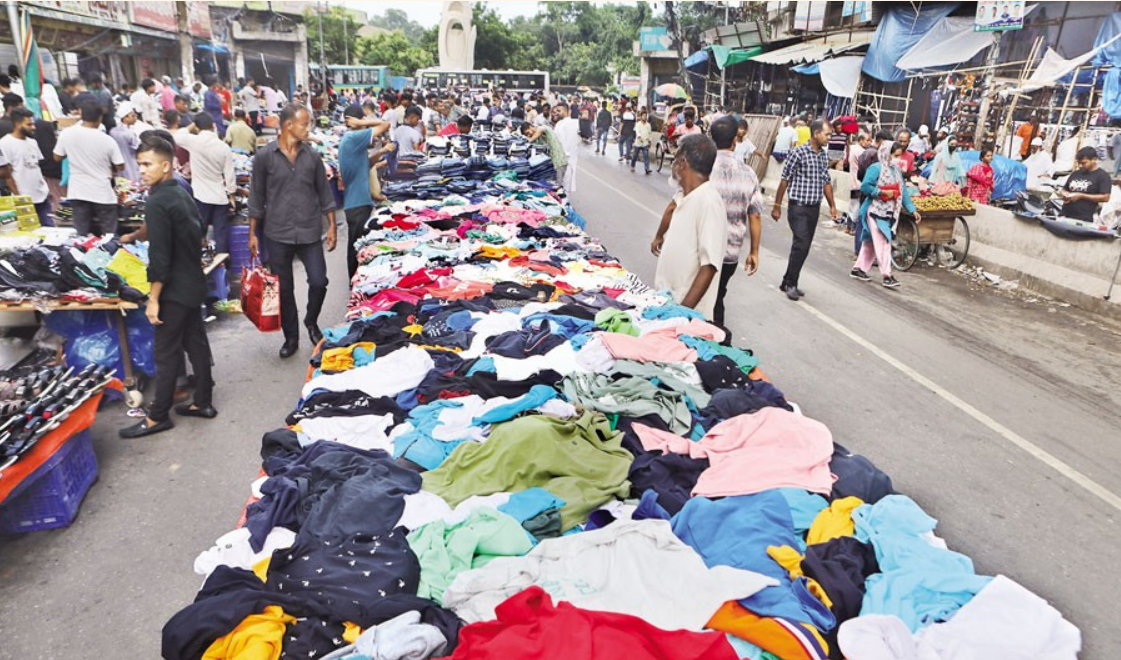
Prime Minister Tarique Rahman’s directive to swiftly rehabilitate evicted street hawkers marks a welcome shift in urban policy thinking. For too long, Dhaka’s approach to informal commerce has relied on periodic eviction drives that offer momentary relief to traffic congestion but fail to deliver lasting solutions. This latest instruction signals a recognition that street vendors are not merely obstacles to order—they are an integral part of the city’s economic and social fabric.
Dhaka’s streets tell a familiar story. Footpaths become marketplaces, commuters spill onto roads, and congestion worsens. Authorities respond with crackdowns, clearing vendors from key areas such as Mirpur, Motijheel, Gulistan, and Paltan. Yet within days, the vendors return, driven not by defiance but by necessity. Nearly 90,000 hawkers operate in the capital, many supporting entire families. Many believe the number is more higher. But the actual number of the hawkers is unknown as there was no comprehensive survey on it. Removing them without viable alternatives only deepens economic vulnerability and perpetuates a cycle of displacement and return.
The government’s plan to designate vending zones and introduce a registration system is, therefore, a step in the right direction. Providing structured spaces where hawkers can operate with dignity addresses both livelihood concerns and the need for urban order. If implemented effectively, such zones could restore pedestrian access, reduce congestion, and create a more organized commercial environment.
However, intent alone is not enough. Execution will determine whether this initiative succeeds or becomes another well-meaning but short-lived effort. Past experiences with designated markets show that without proper planning, accessibility, and incentives, vendors often abandon these spaces and return to busy streets where customer flow is guaranteed. Location matters. Vending zones must be strategically placed near high foot traffic areas, not in isolated corners that undermine business viability.
Equally important is transparency in the proposed registration system. While issuing identity cards can bring vendors under a regulatory framework, it also opens the door to corruption and political patronage. There is a real risk that access to vending spaces could be captured by opportunistic groups, sidelining genuine hawkers. To prevent this, the process must be digital, verifiable, and strictly monitored, with clear eligibility criteria and grievance mechanisms.
Urban planning solutions must also go beyond relocation. A more flexible, inclusive approach is needed—one that recognises the dynamic nature of informal trade. Time-based vending, for instance, can allow vendors to operate during off-peak hours without disrupting traffic. Pilot projects in selected zones can help authorities test models, gather data, and refine policies before scaling up citywide.
Infrastructure interventions can further support this transition. Improved footpath design, designated parking near schools, and better traffic management can reduce the pressures that currently push vendors into unsafe or obstructive spaces. At the same time, investment in vendor facilities—such as shelters, waste management systems, and access to microfinance—can transform informal markets into cleaner, more sustainable urban assets.
Ultimately, the challenge is not to eliminate street vending but to integrate it into the city’s planning framework. Dhaka’s informal economy serves millions, particularly low-income residents who depend on affordable goods and services. Ignoring this reality risks creating policies that are both ineffective and unjust.
The Prime Minister’s directive provides an opportunity to break from the past. But success will require more than relocation—it demands a comprehensive, transparent, and inclusive strategy. Rehabilitate the hawkers, regulate the system, and redesign the streets. Only then can Dhaka move toward a future where mobility, livelihoods, and urban order coexist.