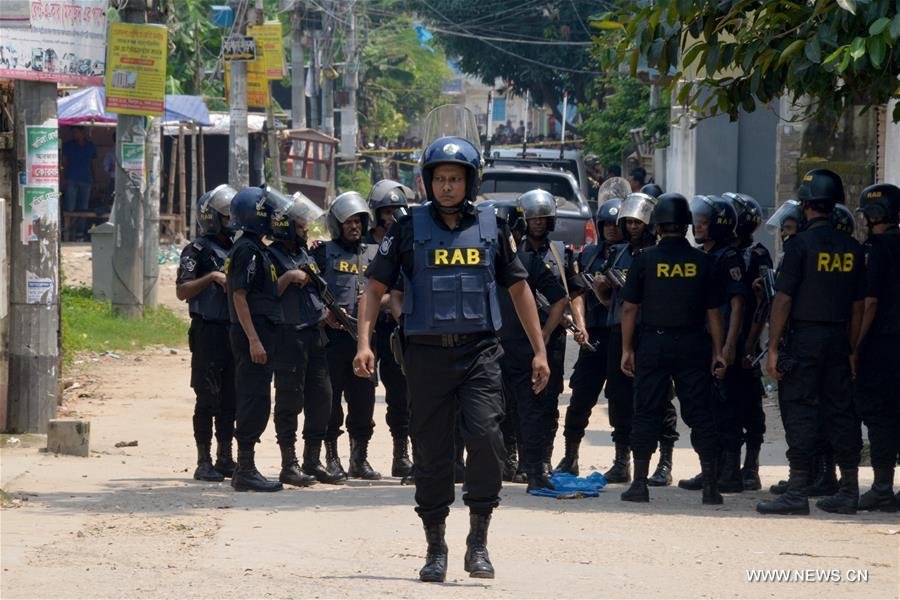
The government’s decision to restructure the Rapid Action Battalion (RAB) as a more people-friendly and accountable force deserves cautious appreciation. Over the years, the elite force has played an important role in combating militancy, terrorism and organised crime. At the same time, however, RAB has also become one of the country’s most controversial institutions because of allegations of extrajudicial killings, enforced disappearances and political misuse during the previous regime. Any reform initiative, therefore, must go beyond cosmetic changes and address the deeper crisis of accountability and public trust.
Home Minister Salahuddin Ahmed has announced several reform measures, including specialised training on human rights, international standards regarding the use of force, professional ethics and the use of artificial intelligence in crime prevention. The proposal to formulate a specific and comprehensive law for RAB is also a positive step. The force has operated for nearly two decades under temporary provisions of the Armed Police Battalion Act, despite possessing extraordinary operational authority. Such an institution cannot continue indefinitely without a clear legal framework defining its authority, limitations and accountability.
The minister has also acknowledged that RAB’s image was damaged because it was allegedly used during the previous Awami League government to serve political purposes. This admission is important because public confidence cannot be restored unless the state openly recognises past failures. For years, local and international human rights organisations raised serious concerns over custodial torture, enforced disappearances and so-called crossfire killings involving members of the elite force. The sanctions imposed by the United States on several former and serving RAB officials further intensified international scrutiny of Bangladesh’s human rights situation.
However, restructuring alone will not be enough. Changing the name of the force or introducing new strategies cannot erase memories of past abuses. Public trust can only be restored if justice is ensured for victims and accountability is established for those responsible for crimes committed under the cover of state authority. The Home Minister has stated that directives have already been issued to take legal action against accused officers. That commitment must now be reflected through transparent investigations and impartial trials.
In this regard, the recommendations made by the reform commissions formed during the interim administration should be followed seriously. Those recommendations reportedly included stronger civilian oversight, independent complaint mechanisms, clearer operational guidelines and safeguards against political interference. Implementing such measures would help ensure that no future government can misuse the force for partisan interests.
The proposed law for RAB must also include strict provisions for transparency and accountability. A democratic society requires security forces that operate under the rule of law and remain answerable to the people. Professionalism cannot exist without accountability, and security cannot be achieved at the expense of human rights.
At the same time, the government’s effort to strengthen the legal framework regarding enforced disappearances and crimes against humanity is encouraging. Families of victims have waited for years for justice. If the legal reforms are implemented properly, they may help end the culture of impunity that has long weakened public trust in state institutions.
Bangladesh undoubtedly needs a capable and professional elite force to combat evolving security threats. But RAB can only become a truly people-oriented institution when it is free from political influence, bound by law and fully accountable for its actions. Without justice for past abuses, no reform will ever be complete.