By Delowar Hossain
Public Relations (PR) is a crucial strategic tool in organizational management, particularly in Bangladesh. It has evolved from merely sending press releases to shaping brand image, policymaking, crisis management, and stakeholder trust. The increasing role of digital platforms and social media has further accelerated the growth of strategic PR, affecting various sectors including government offices, private companies, startups, and educational institutions etc.
In order to reach out more effectively with the public, Bangladesh government and industry are ramping up their PR initiatives, utilizing websites, Twitter updates, and Facebook Live. During the pandemic, online communication has been demonstrated essential in the health industry. PR teams are concentrating on digital content, media relations, and event management in corporate sectors such as telecom, banking, real estate, and FMCG.
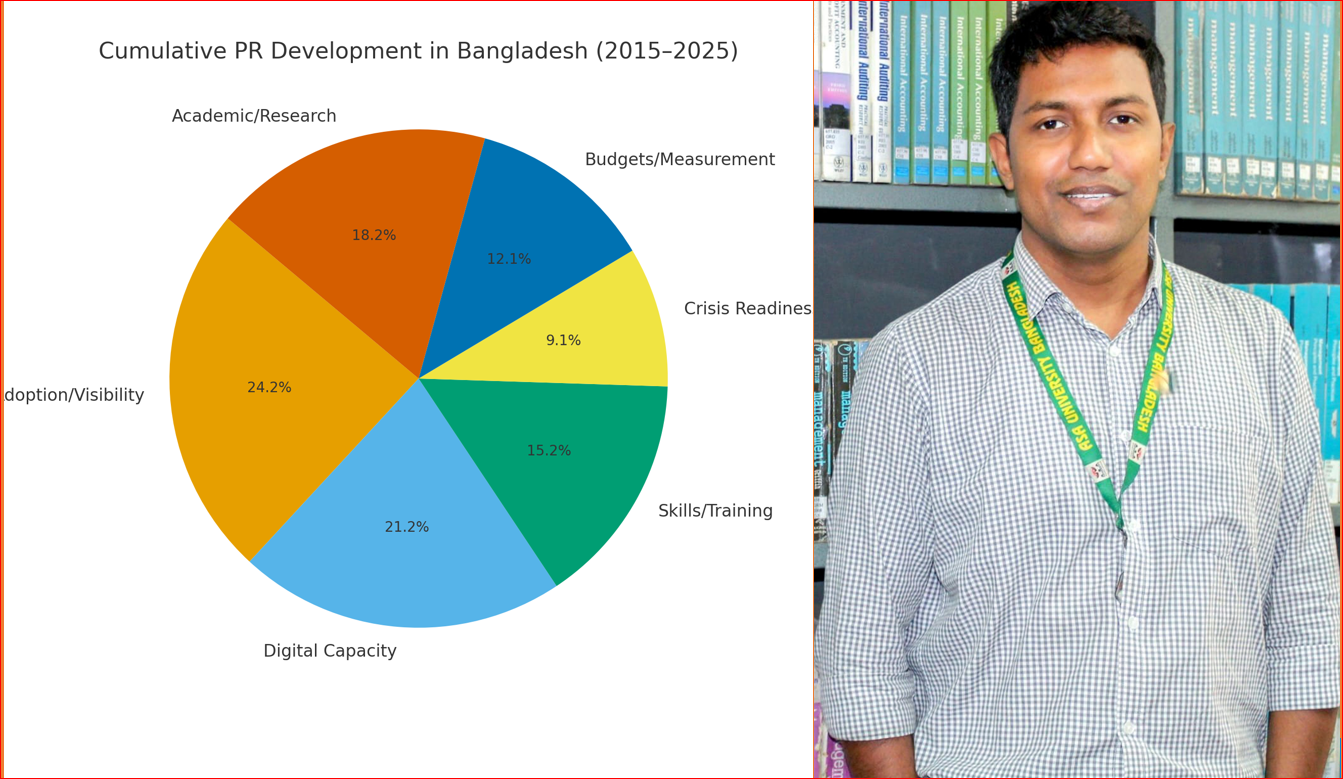
First of all, a lot of organizations continue to put PR on the back burner. PR personnel are frequently demoted to event coordinators or press release writers and frequently sit at the boardroom table. Second, there is still an absence of crisis communication. Numerous businesses choose to keep quiet about mishaps, issues with merchandise, or disputes rather than speak out, which lets rumors spread like wildfire. Third, information does not always flow in a consistent manner. PR efforts are impacted by the uncertainty created by concerns about digital security and media freedom.
Another significant obstacle is the lack of qualified specialists. Strategy, research, data analysis, and social listening are all necessary for world-class PR, yet most firms currently lack these competencies.
Additionally, budgets are limited. According to international estimates, businesses all over the world are making significant investments in technology and measurement, but Bangladesh is still trailing behind.
The data has been collected from various academia, newspaper and research article also.
PR must be integrated into board-level decision-making, with teams handling not just events but also reputation and risk management. Digital capacity should be strengthened through KPI-based reporting, crisis simulations, and social listening tools. Ethics and transparency must take priority, emphasizing fact-checking and open communication over exaggeration or misinformation. Talent development is key, with training, international conferences, and modern university curricula equipping future PR professionals to excel globally in digital strategy and crisis communication.
Professional public relations officers are strategists, reputation defenders, and storytellers in addition to being news release writers. They create brand stories, cultivate public and media trust, handle crises with prompt information, offer policy advice, and offer data-driven insights for decision-making. PR’s role is expanding in Bangladesh, but companies run the risk of lagging behind other countries if it is restricted to ceremonial duties. Organizations may make reputation and credibility their greatest assets by adopting PR as the ‘science of building trust’; and combining strategy, technology, and ethics.
Writer Delowar Hossain is the Public Relations Officer of ASA University, Bangladesh and a former reporter of the Bangladesh Post.