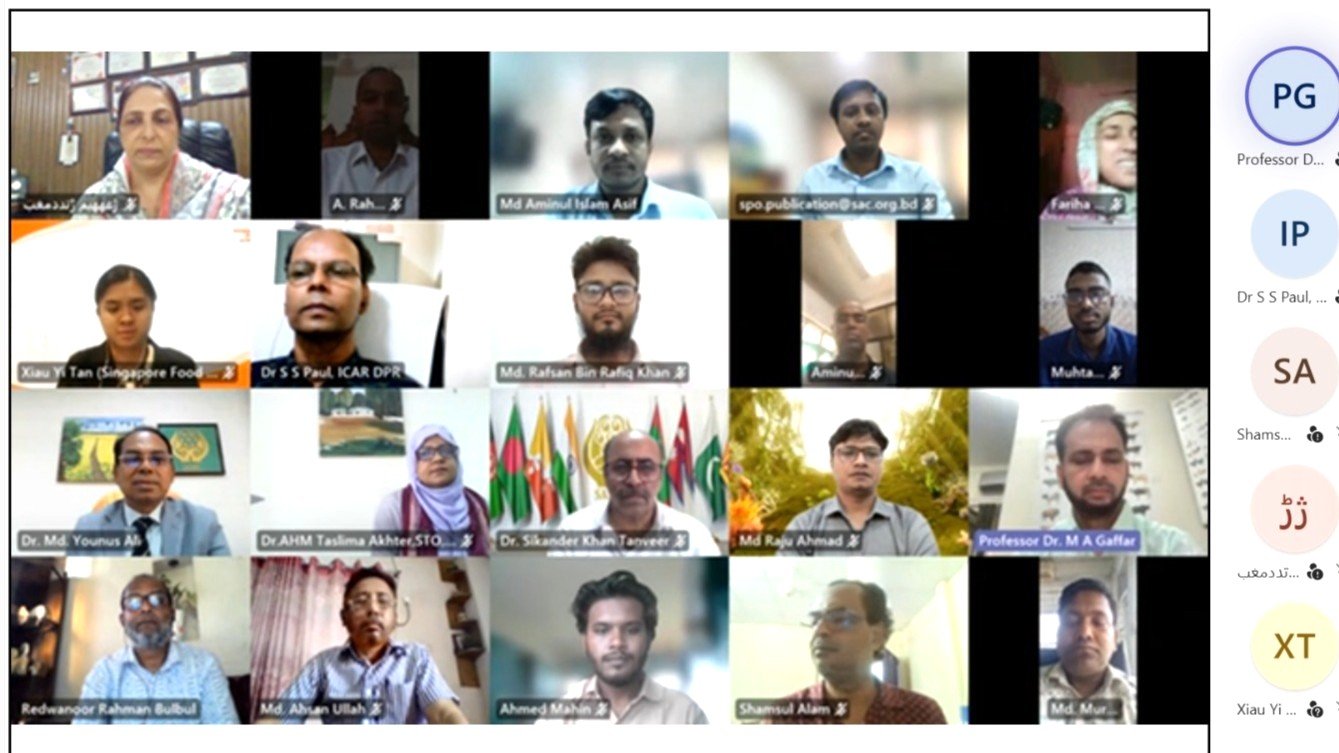
Experts from across South Asia and beyond have underscored the importance of adopting the “One Health” approach to ensure safe, sustainable and resilient poultry production, saying closer coordination among the agriculture, public health and environmental sectors is essential to address emerging challenges and strengthen food security.
The observations came during an international webinar titled “Safe Poultry Production in the Context of One Health Approach,” organised by the SAARC Agriculture Centre (SAC).
The event brought together scientists, researchers, policymakers, academics, veterinarians, industry representatives, students and development professionals to exchange knowledge and discuss strategies for improving poultry production systems while protecting human, animal and environmental health.
In his opening remarks, SAC Director Dr Md Harunur Rashid highlighted the growing significance of the poultry sector in ensuring nutrition, food security and rural livelihoods across the region. He said the rapid expansion of poultry farming has created new opportunities but also poses challenges related to disease outbreaks, food safety, antimicrobial resistance and environmental sustainability.
He noted that the “One Health” approach, which promotes integrated efforts among human health, animal health and environmental sectors, offers an effective framework for addressing these interconnected issues.
"The sustainability of poultry production depends not only on increasing output but also on ensuring that production systems remain safe, environmentally responsible and resilient to emerging threats," he said.
Delivering the keynote presentation, Dr Shyam Sundar Paul, Head of the Division of Poultry Nutrition at the ICAR-Directorate of Poultry Research in India, emphasized the importance of scientific poultry management and nutrition in improving productivity and maintaining animal welfare.
He said enhanced biosecurity measures, balanced feeding practices, proper farm management and disease prevention strategies are critical for reducing production losses and ensuring the supply of safe poultry products to consumers.
According to him, responsible farming practices can significantly improve the efficiency of poultry production while reducing risks to both animal and public health.
Xiau Yi Tan, Senior Scientist at the National Centre for Food Science under the Singapore Food Agency, focused on food safety and disease prevention in poultry production systems. She highlighted the importance of maintaining strict hygiene standards throughout the production chain, from farm management to processing and distribution.
She stressed that stronger collaboration among veterinarians, farmers, food safety authorities and public health professionals is necessary to identify and mitigate potential risks before they affect consumers.
The experts also discussed the growing global concern over zoonotic diseases, antimicrobial resistance and environmental pressures linked to intensive livestock production. They agreed that integrated surveillance systems, responsible use of veterinary medicines, improved farm biosecurity and greater awareness among producers are essential components of sustainable poultry development.
The discussion further emphasized the need for innovation, research and capacity-building initiatives to help poultry producers adapt to changing disease patterns, climate-related risks and evolving food safety requirements.
The session was moderated by Dr Md Younus Ali, Senior Programme Specialist (Livestock) at the SAARC Agriculture Centre, who facilitated an interactive discussion among participants.
The webinar drew wide participation from SAARC member countries and other regions, reflecting growing interest in strengthening regional cooperation to promote safe, efficient and environmentally sustainable poultry production systems.
Participants expressed optimism that the adoption of the “One Health” approach would help countries enhance food safety, improve animal health management and build more resilient poultry industries capable of meeting future food security demands.