I am a visually impaired person—I cannot see. After a long and hard battle, I have made my place in the society. This is not only my story but that of other people with disabilities who have faced the same struggles. Mainstream schools did not give them admission. Ordinary people thought that people with disabilities were beggars, a burden for their family, and a curse for the society.
These days the perception towards people with disabilities has changed. People with disabilities are going to school and even taking higher education. They are working in governmental and private organizations. But these changes did not happen easily.
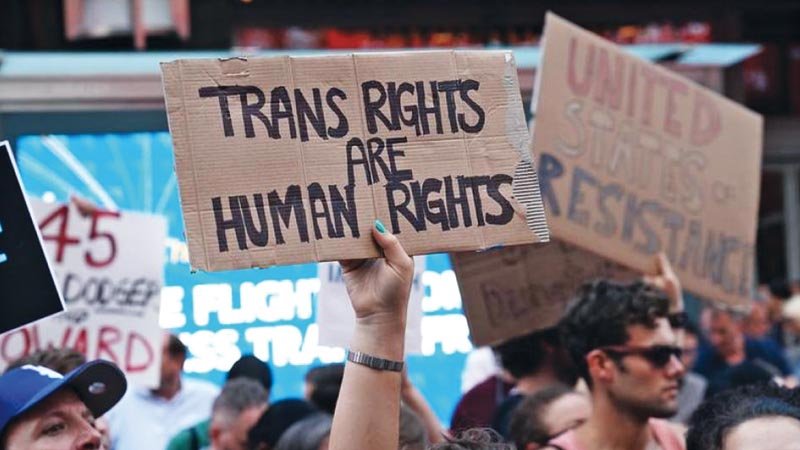
Currently I am working at a non-profit organization. Through my job I have had the opportunity to meet some transgender people. From those interactions I have learned that transgender people are another marginalized group in our society. The perception of ordinary people towards transgender people is that they are beggars and thieves. Some people think that both male and female hormones are working in their body, making them crazy.
To change this lack of social acceptance, at first we have to create some positive examples. We have to remember that almost all transgender people are illiterate. It is thus difficult to have any notable example like a doctor, engineer or teacher. Many people believe that creating self-employment can help to mainstream transgender people.
From my personal experience I can say that, at the moment, self-employment is not the right strategy. Suppose a transgender person opens a food shop, a barber shop or a beauty parlour. Nobody will buy their service because people are afraid of transgender people. In this circumstance, if the Government of Bangladesh recruits some transgender people in low-end jobs like driver, cleaner, cook, or security guard, they could show ordinary people that transgender people want to work.
There is no doubt that access to education can help mainstream transgender people.So we have to encourage transgender people to go to school where they could not only get an education, but also interact with others and help break down stereotypes and prejudices. The Ministry of Social Welfare is giving three hundred taka per month allowance at the primary level. It’s an appreciable initiative. But the problem is that school authorities are reluctant to enrol a transgender person. Even if they are admitted, they face bullying. As a result, many leave school.
In the past, people with disabilities faced a similar situation. To solve the problem, the Government of Bangladesh passed a law called The Disability Rights and Protection Act 2013. Passage of the law gave people with disabilities a strong base from which to fight for their rights. Now people with disabilities can claim all kinds of civil, political, social, economic, and cultural rights. Moreover, there is now a legal definition for people with disabilities. Currently transgender people do not have any legal status.
Further, there is confusion as to the definition of a transgender person.The Government of Bangladesh prepared a law in 2015 called Prohibition of Discrimination Act. If the Government of Bangladesh passes the law, we can utilize a legal definition to work for their rights. Governmental and non-governmental organizations could make and enact plans for the well being of transgender people. Above all, transgender people could themselves claim their rights.
This is important as we as a nation do not want to see a permanent beggar class in our society. Nor do we wish to see people who are excluded from the society. Transgender people do not violate any laws of nature; they are a product of nature. The more I interact with them, the more appreciation I gain for them as individuals with their own feelings and personalities, and with the same warmth and generosity we often find in others.
Every day after my office work is done, I go home via Panthapath Road. Several times I have encountered transgender people on the way. They never ask me for money. Whenever they come close to my rickshaw they say, “I’m sorry, I didn’t realize you have a disability.” Perhaps the only true disability is the inability to see—and welcome—others as genuine members of our diverse society.