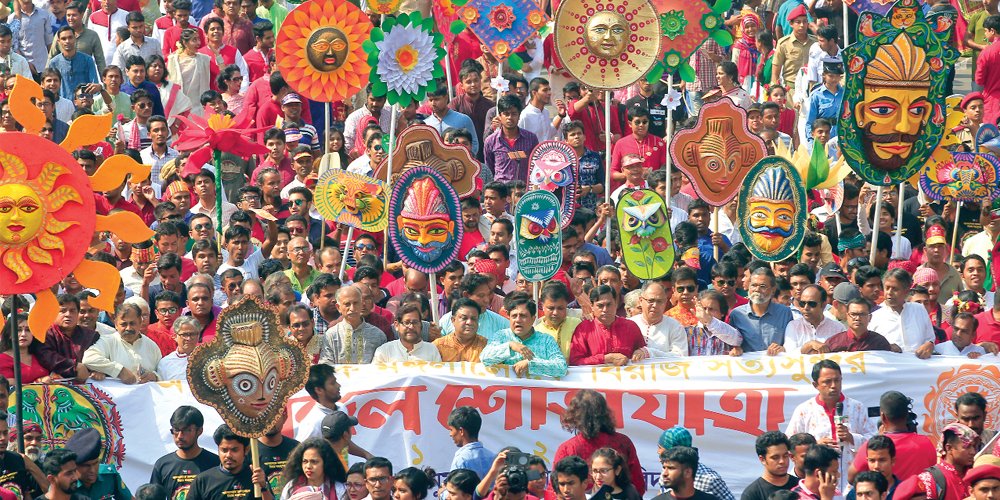
Today is Pahela Baishakh, the first day of the Bengali new year 1433. People across the country are all set to celebrate the day with various colourful programmes. Pahela Baishakh is not just a cultural festival—it is a powerful symbol of unity and identity for Bengalis everywhere. The vibrant celebrations of the day remind us of the beauty of our rich tradition and the importance of
embracing fresh beginnings with hope and positivity.
Pahela Baishakh reflects the true spirit of Bengali identity. Regardless of religion, class, or background, people come together wearing traditional attire—white and red sarees for women and panjabis for men. The day begins with cultural programmes, songs like “Esho He Baishakh,” and colorful processions such as the famous Baishakhi Shobhajatra, which has been recognized globally for its cultural significance. These celebrations highlight the richness of Bengali traditions and promote a sense of belonging among people.
Economically, Pahela Baishakh also holds great importance. Local businesses open Haal Khata, a traditional accounting practice where shopkeepers settle old dues and welcome customers with sweets. This not only strengthens relationships between buyers and sellers but also boosts small-scale businesses and local markets.
However, beyond the festivities, Pahela Baishakh carries a deeper message. It encourages us to step forward with renewed determination leaving behind negativity, mistakes, and regrets of the past year. In a rapidly changing world, where modern influences often overshadow traditions, this day serves as a reminder to preserve our cultural roots while moving ahead with progress.
Ensuring safety, promoting inclusivity, and protecting cultural authenticity are essential to keep the spirit of Pahela Baishakh alive for future generations. It should not only be a commercial event but also remain a meaningful expression of Bengali values and unity.
The environmental impact of large-scale celebrations cannot be ignored. The use of non-biodegradable materials, excessive waste generation, and noise pollution contradict the very philosophy of harmony with nature that the festival symbolizes. A day meant to welcome purity and new beginnings should not leave behind traces of ecological neglect.
Another dimension often overlooked is inclusivity. While Pahela Baishakh is widely regarded as a unifying force, certain segments of society remain marginalized from its mainstream celebrations. Economic disparity limits participation for many, turning a universal festival into a selective experience. True cultural celebration must ensure that its joy is accessible, not exclusive.
We should keep in mind that Pahela Baishakh is not just the start of a new year—it is a celebration of resilience, diversity, and hope. As we welcome new year, let us carry forward the spirit of harmony and renewal, making not only our traditions stronger but also our society more compassionate and united.