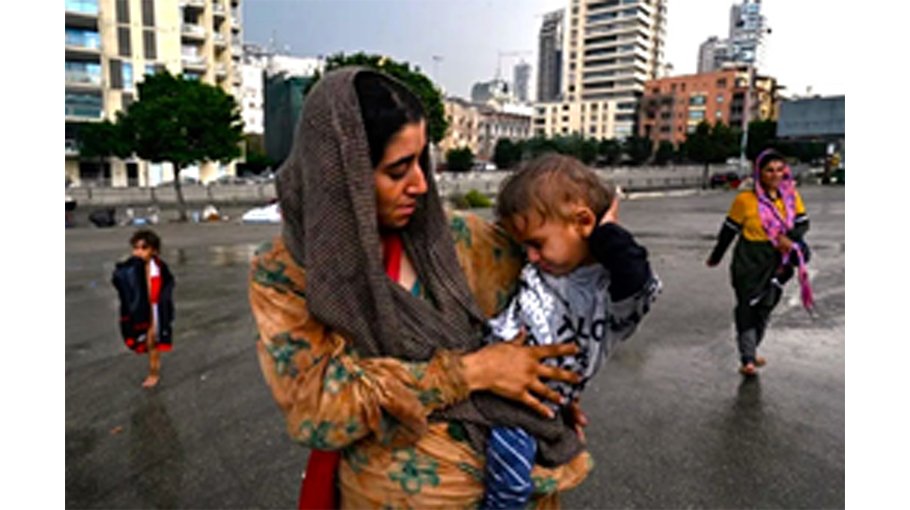
Fady Nasreldeen, his wife and daughter are still sleeping rough by the shores of the Mediterranean Sea, among the last holdouts after the police evicted hundreds of people from the seaside on October 31.
The people were displaced, having pitched their tents there after fleeing the Israeli bombing of their homes in the district of Dahiyeh in Beirut’s southern suburbs.
“There were about 400 to 450 people that came to the seaside,” said Nasreldeen, adding that his family had not be able to find spots in the sparse government shelters that are available in the country.
The first major exodus from Dahiyeh, which is controlled by the Lebanese group Hezbollah, was when Israeli forces dropped 80 bombs on residential buildings on September 28, killing Hezbollah’s leader, Hassan Nasrallah, and an unknown number of civilians.
Later that night, Israel issued several evacuation orders on social media, terrifying thousands of civilians into leaving their homes and seeking refuge across Beirut.
Since Israel escalated its war on Hezbollah in September, more than 1.2 million people have been uprooted from their homes. Tens of thousands have taken refuge in schools that Lebanon’s caretaker government – functioning without a president for two years – has converted into shelters.
But with space filling up, many have few alternatives but to squat in abandoned buildings or sleep in public spaces, such as outside mosques or on pavements.
Lebanese authorities are exacerbating their predicament by increasingly evicting people from informal settlements, even as winter quickly approaches and ceasefire talks waver.
Al Jazeera sent written questions to police spokesperson Joseph Salam to ask why officers are evicting displaced families from informal settlements, but no response was received by the time of publication.
Hope for a ceasefire?
Nasreldeen’s house was destroyed by the strikes that killed Nasrallah.
The blast waves blew the hinges off his doors and shattered his windows, terrifying his wife and daughter. Since fleeing, he has not returned to Dahiyeh but says he will rebuild his apartment once the war stops.
Last week, he was optimistic that a ceasefire might arrive before the United States elections on November 5, but news reports of a possible truce quickly lost their lustre.
“A few days ago, we didn’t think the war would drag on, but now we think that the war could go on for at least another few months,” he told Al Jazeera.