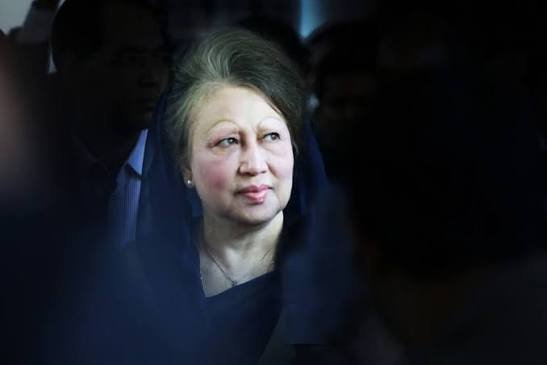
Begum Khaleda Zia, one of the most prominent figures in Bangladesh’s political history, was born on August 15, 1945, in Dinajpur. Born Khaleda Khanam Putul to Iskandar Majumder and Tayeba Majumder, she grew up in a relatively quiet family environment in northern Bangladesh. Few could have anticipated that she would eventually rise from an ordinary homemaker to become the country’s first female prime minister and one of its most influential political leaders.
Her life was shaped by personal tragedy, political upheaval, imprisonment, illness and decades of political struggle.
From Homemaker to Political Leader
Khaleda Zia married Ziaur Rahman, then a young officer in the Pakistan Army, in 1960. Her early married life was largely centred on her family as she accompanied her husband through his postings in different parts of the country.
The Liberation War of 1971 brought profound changes to the country and to her family. Ziaur Rahman later emerged as a major political figure and became president of Bangladesh.
His assassination on May 30, 1981, changed Khaleda Zia’s life permanently. With the BNP facing a leadership crisis, she entered politics at the urging of the party’s leaders and activists despite having little prior political experience.
She gradually assumed leadership of the BNP and went on to become one of the country's most powerful political figures.
The Rise of the ‘Uncompromising Leader’
During the 1980s, Khaleda Zia became a leading opponent of military rule. She played a central role in the movement demanding the restoration of democracy and became widely known as the “Uncompromising Leader” for her refusal to compromise on her political demands.
Following the restoration of parliamentary democracy, she became prime minister in 1991, making history as Bangladesh’s first woman to hold the office.
Her governments introduced a number of initiatives in education and social development. The expansion of compulsory primary education, the Food for Education programme and measures to promote girls’ education were among the policies associated with her tenure.
She returned to power in 1996 and again in 2001, serving multiple terms as prime minister and remaining at the centre of Bangladesh’s intensely competitive two-party political system.
Years of Political and Legal Struggles
Khaleda Zia’s political career was also marked by prolonged confrontation with her principal political rival, the Awami League.
During the military-backed caretaker government in 2007, she was detained. Her political and legal troubles continued in the following years, particularly after she was convicted in the Zia Orphanage Trust corruption case in 2018.
Her imprisonment and deteriorating health significantly reduced her involvement in active politics. She was released in March 2020 under an executive order, although restrictions and health problems kept her largely away from frontline political activities.
Recognition and International Attention
Khaleda Zia received recognition from several organisations and institutions outside Bangladesh during her political career. In 2011, the New Jersey State Senate honoured her with a “Fighter for Democracy” award.
She was also recognised in 2018 by the Canadian Human Rights International Organization, which conferred on her the title “Mother of Democracy.”
Final Years
Bangladesh underwent another major political transformation in August 2024. Despite years of illness and political restrictions, Khaleda Zia remained a significant figure in national politics and continued to call for peace and stability.
She later travelled abroad for medical treatment and spent time in London with her son Tarique Rahman, his family and her grandchildren. Her return to Bangladesh marked another important moment for her supporters after years of political uncertainty and health complications.
Khaleda Zia died on December 30, 2025, bringing an end to a political career spanning more than four decades.
An Enduring Legacy
Khaleda Zia’s political legacy remains a subject of both admiration and debate. To her supporters, she was a symbol of democratic resistance and political resilience. To her critics, her tenure remains associated with the intense political polarisation that has defined Bangladesh’s modern history.
But there is little doubt about the scale of her impact. From a private family life to the highest office in the country, Khaleda Zia became a central figure in Bangladesh’s political evolution.
Her journey remains one of the most consequential stories in the country’s contemporary political history.