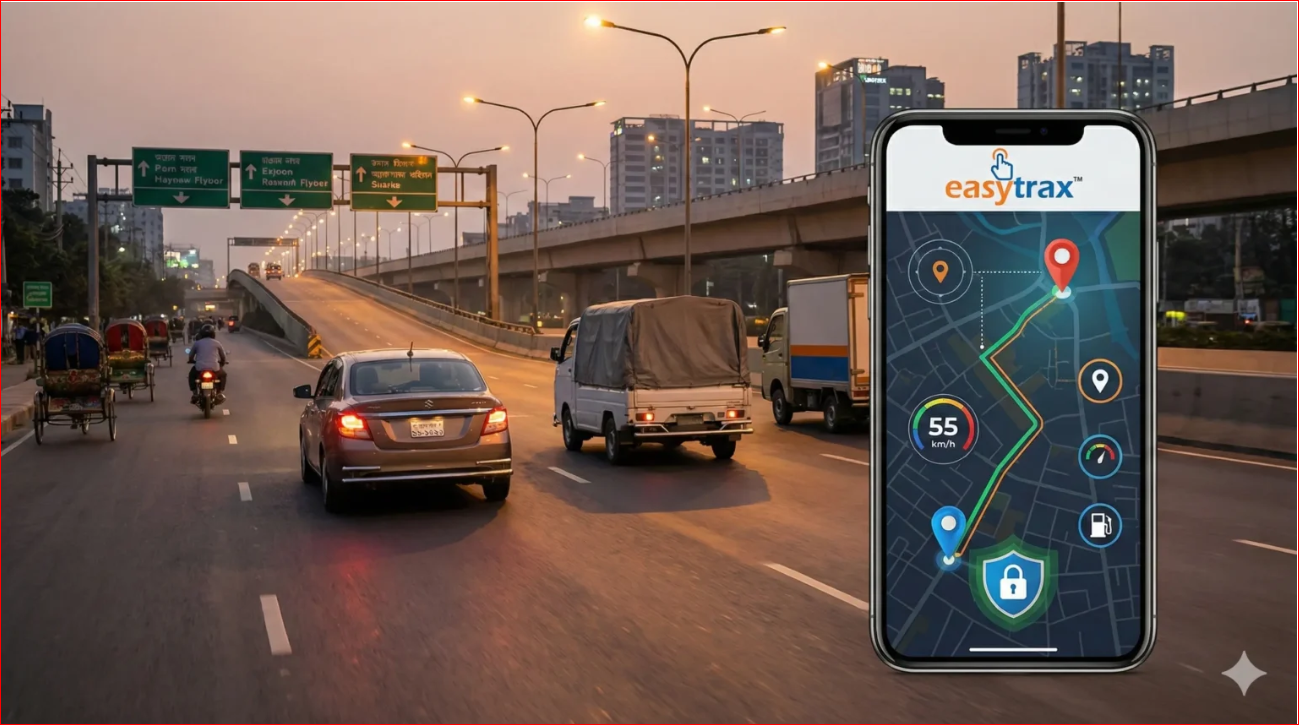
We came to learn through a media report that Bangladesh Road Transport Authority (BRTA) is going to introduce Global Positioning System (GPS) to prevent road crashes and thereby curb road fatalities. Road accidents have become one of the most alarming public safety issues in Bangladesh.
Every year, lives of several thousand people are lost and many more injured in road crashes across the country. Despite awareness campaigns and policy discussions, road safety still remains a far cry. So, we laud the BRTA initiative to introduce GPS technology aiming to ensure traffic discipline and reduce road fatalities.
In the modern age of technology which shapes everyday life, ensuring road safety has become a necessity. With rising numbers of vehicles and frequent traffic accidents, traditional safety measures alone are no longer enough. One of the most promising solutions is the use of GPS technology, which offers real-time tracking, navigation, and monitoring to make roads safer for everyone.
GPS plays a vital role in guiding drivers through unfamiliar routes, reducing the chances of getting lost or making sudden, risky decisions. By providing accurate directions and suggesting alternative routes during traffic congestion, GPS helps drivers avoid dangerous situations. This not only saves time but also reduces stress, which is often a cause of reckless driving.
Another important benefit of GPS is vehicle tracking. Transport companies and private vehicle owners can monitor the exact location and speed of their vehicles. This helps ensure that drivers follow traffic rules and avoid over-speeding. In many cases, parents also use GPS to track school buses or their children’s movements, adding an extra layer of safety and peace of mind.
GPS technology also supports emergency services. In the event of an accident, GPS can help quickly identify the exact location, allowing ambulances and rescue teams to reach the spot faster. Some advanced systems can even send automatic alerts to emergency contacts when a collision occurs. This rapid response can save lives and reduce the severity of injuries.
Moreover, GPS-based apps often provide warnings about speed limits, sharp turns, accident-prone zones, and road conditions. Such alerts encourage drivers to stay cautious and follow traffic regulations. With voice-guided navigation, drivers can keep their eyes on the road instead of looking at maps, which further reduces distractions.
However, relying on GPS alone is not enough. Drivers must remain responsible and attentive. Overdependence on technology can sometimes lead to carelessness, especially if the system provides incorrect or outdated information. Therefore, GPS should be used as a support tool rather than a substitute for human judgment.
We hope use of GPS technology, combined with responsible driving and proper traffic management, can greatly reduce accidents and save lives.
Embracing such smart technology is essential for building a safer and more efficient transportation system.