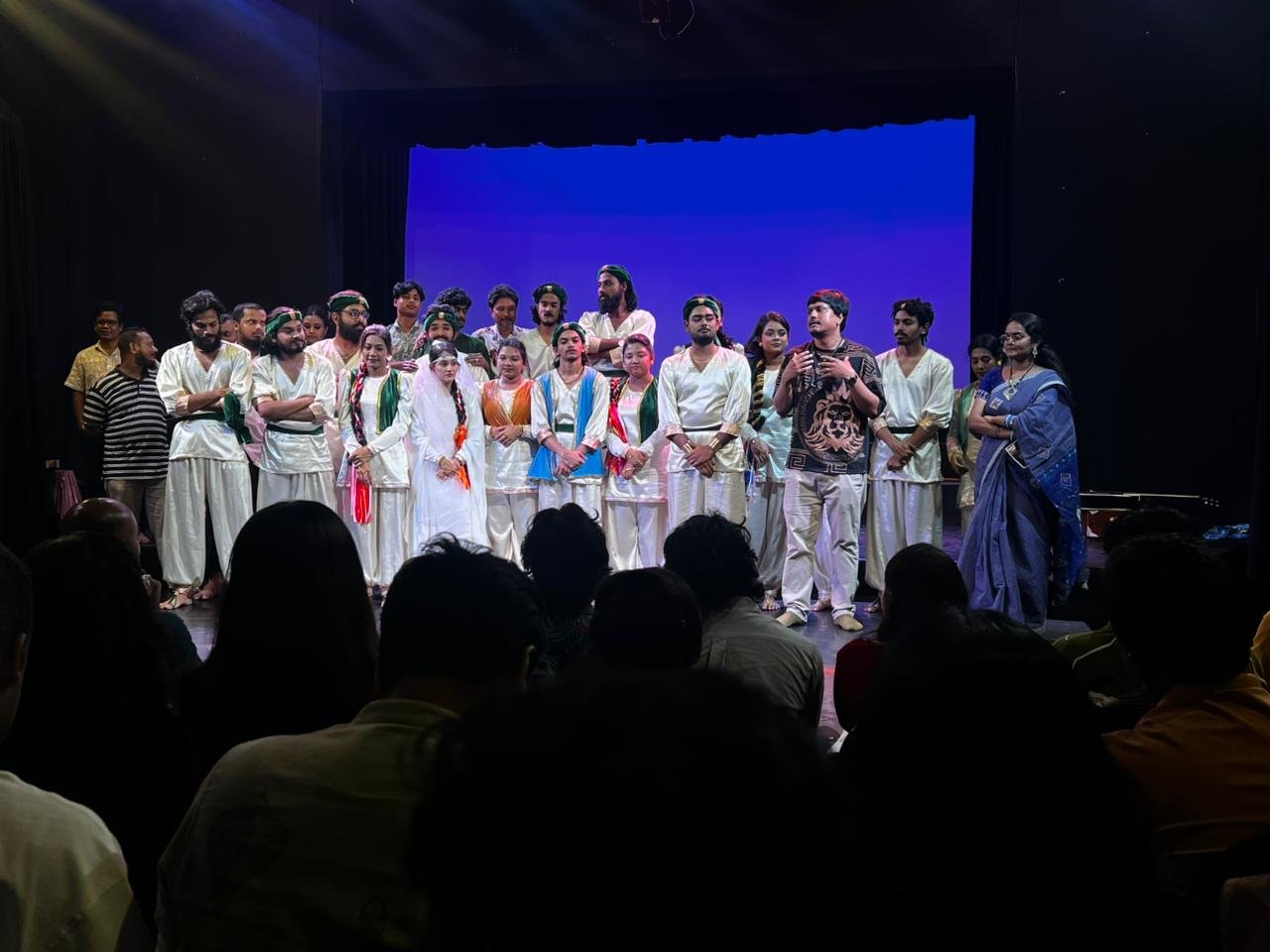
A timeless tale of love, devotion, and spiritual longing has returned to the stage as the Department of Theatre and Performance Studies at the University of Dhaka presents a musical adaptation of Laili-Majnu at the university's Natmandal Auditorium.
The production is being staged from May 18 to 22, with performances held daily at 7:00 PM and two shows scheduled on the final day. Performed by third-year, sixth-semester students, the nearly two-hour production has emerged as one of the department's most ambitious recent ventures, drawing audiences into the rich world of medieval Bengali literature through music, movement, and visual storytelling.
The story of Laili-Majnu originated from the legendary romance of Qays ibn al-Mulawwah and Layla in seventh-century Arabia. It later gained international acclaim through the celebrated Persian poet Nizami Ganjavi's literary adaptation. In Bengal, the tale was immortalized by Daulat Uzir Bahram Khan, who transformed the Persian romance into a distinctive medieval Bengali dobhashi text, blending Persian mysticism with local language and cultural sensibilities.
Drawing inspiration from Bahram Khan's version, the Dhaka University production reimagines the classic narrative as a musical theatre experience. The performance stands out for its extensive use of live music, ensemble singing , and choreographed movement, creating a captivating atmosphere that bridges centuries-old literature and contemporary stagecraft.
The adaptation, stage, lighting and prop design, as well as the direction, were undertaken by Assistant Professor Tanvir Nahid Khan. The music direction was jointly planned by Tanvir Nahid Khan and Sohanur Rahman, whose fusion of traditional and contemporary musical elements enriches the storytelling throughout the production.
The cast features multiple performers alternating in key roles. Hashor, Sohan, Jibon, Tirtha, Adib and Ifad portray Majnu, while Shahi Mimi, Monika, Tanzima, Ayesha Moni, Tafanum orpi, Khasrei, Sagarika, and Upoma take on the role of Laili. Jannatul Nibir and Othoi appear as Hetubati, Farzana Mim and Monon play Laili's mother and father, while Sithi and Kathak portray Majnu's mother and father. Shahin Alam, Adib, and Apon portray Ibn Salam, while Gaurab plays Nowfel.
One of the production's most notable achievements is its excellent multifaceted direction, Aesthetic light design and exeptional use of every space in the Natmandal in harmony with the performance. The successful engagement with Generation Z performers is also Significant. Despite the challenges of presenting a text rooted in medieval language and culture, the adaptation is euphonious and young actors deliver confident performances that make the classic story accessible and emotionally resonant for contemporary audiences.
More than a retelling of a legendary romance, Laili-Majnu celebrates the enduring relevance of classical literature, demonstrating how young artists can preserve, reinterpret , and carry forward a rich cultural heritage for future generations.