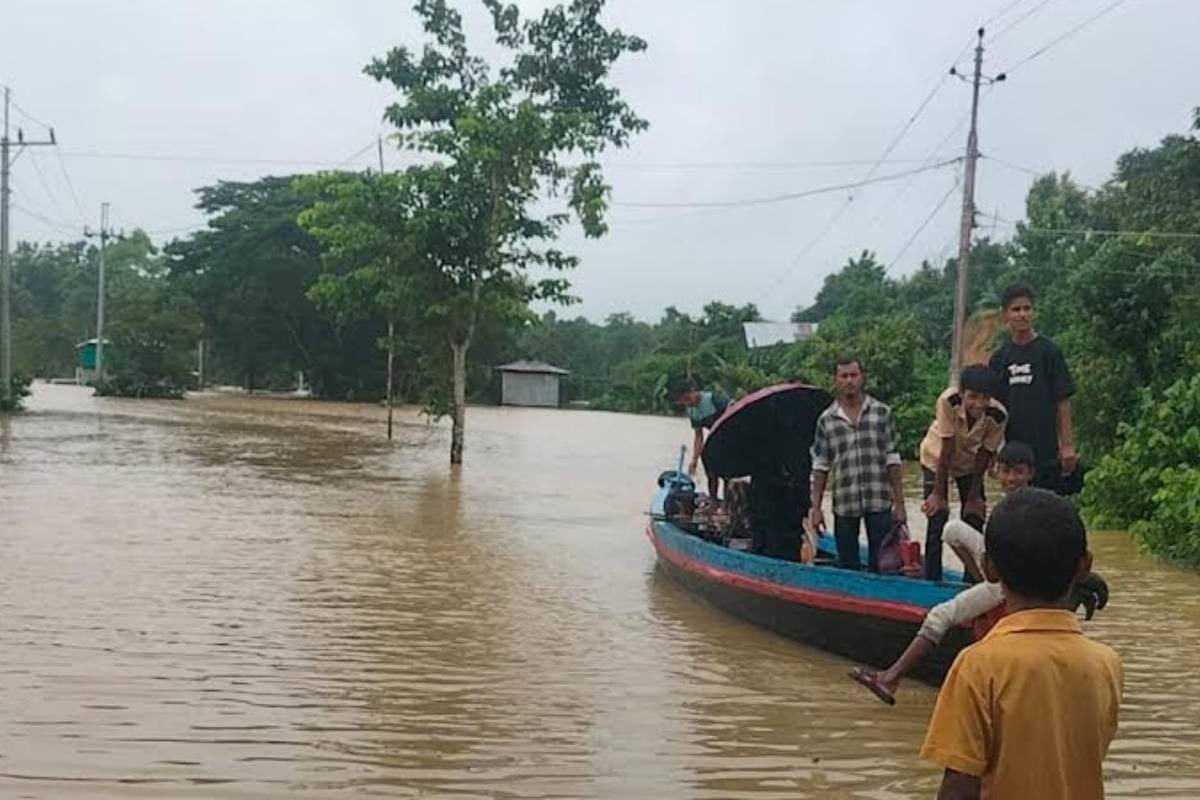
Heavy rainfall and upstream inflows from India have intensified the flood situation across Bangladesh, with at least six major rivers flowing above the danger level and several others expected to cross critical thresholds over the next few days.
According to the Flood Forecasting and Warning Centre (FFWC), the Sangu, Matamuhuri, Manu, Dhalai, Khowai and Kushiyara rivers were flowing above the danger level on Thursday. Water levels exceeded danger marks at 10 monitoring stations, while 11 other rivers are likely to cross the danger level within the next two to three days.
The FFWC warned that low-lying areas in at least 14 districts across the northeast, southeast and northern regions could experience fresh flooding or worsening conditions. Sylhet, Sunamganj, Bandarban, Chattogram and Cox's Bazar are among the districts facing the highest risk.
Northern districts remain on high alert
In Lalmonirhat, the Teesta River was flowing close to the danger level at the Dalia Barrage, inundating low-lying villages, roads and cropland. Authorities opened all 44 gates of the barrage to reduce pressure as flooding spread across several riverside unions in five upazilas.
In neighbouring Kurigram, rising water levels in the Teesta, Dharla and Dudhkumar rivers inundated char areas, raising fears of a third wave of flooding this monsoon season.
In Gaibandha, the Karatoya and Ghaghat rivers also continued to rise, although both remained below the danger level.
Sylhet basin faces renewed flood threat
Persistent rainfall has sharply increased river levels across Sylhet Division, heightening concerns over fresh flooding and landslides.
Authorities in Sylhet have prepared 537 flood shelters and identified 160 hills as vulnerable to landslides.
In Habiganj, the Khowai River was flowing 220 centimetres above the danger level at Balla and 115 centimetres above the danger mark at Machulia. Water levels in parts of the Kushiyara River also exceeded danger levels, while riverbank erosion threatened embankments.
In Sunamganj, the Kushiyara River crossed the danger level at Markuli, while the Surma River continued to rise.
In Moulvibazar, erosion along the Dhalai River flooded several villages in Kamalganj, leaving around 10,000 people marooned. The Manu River also remained above the danger level at Chandnighat, increasing the risk of further erosion.
Hill districts continue to struggle
Rangamati recorded 287 millimetres of rainfall in 24 hours. More than 800 people took shelter in 16 emergency centres as flooding and waterlogging affected Rangamati Sadar, Baghaichhari and Langadu.
In Bandarban, floodwaters remained four to five feet deep in several neighbourhoods despite gradual improvement. Roads, markets and homes remained inundated, with traders reporting heavy financial losses.
Coastal and central regions affected
In Hatiya upazila of Noakhali, heavy rain combined with unusually high tides flooded homes, roads, cropland and fish enclosures, disrupting daily life and damaging agricultural production.
Khulna also experienced widespread waterlogging after receiving 78 millimetres of rainfall, leaving roads, residential areas and businesses submerged and causing severe disruption to commuters.
In Gazipur, persistent rain inundated sections of the Dhaka-Mymensingh Highway, creating long traffic congestion as vehicles moved slowly through flooded roads.
In Cumilla, overflowing water from the Gumti River submerged vegetable fields and damaged crops, forcing farmers to salvage produce from waist-deep floodwater.
More rivers expected to cross danger level
The FFWC forecast that the Gomti, Muhuri, Feni, Selonia, Halda, Sarigowain, Someshwari, Jadukata, Bhugai-Kangsha, Surma and Teesta rivers could rise above the danger level within the next two to three days. The Dharla and Dudhkumar rivers are also expected to approach or exceed warning levels.
Meteorologists have forecast heavy to very heavy rainfall over Bangladesh and adjoining Indian states, including Meghalaya, Tripura, Assam and West Bengal, which is expected to accelerate river flows.
Flood forecasters warned that the threat is no longer confined to a single region, with the Teesta basin, Sylhet basin and southeastern districts all facing heightened flood risks. They urged residents in vulnerable areas to remain vigilant and advised local authorities to strengthen preparedness and emergency response measures.