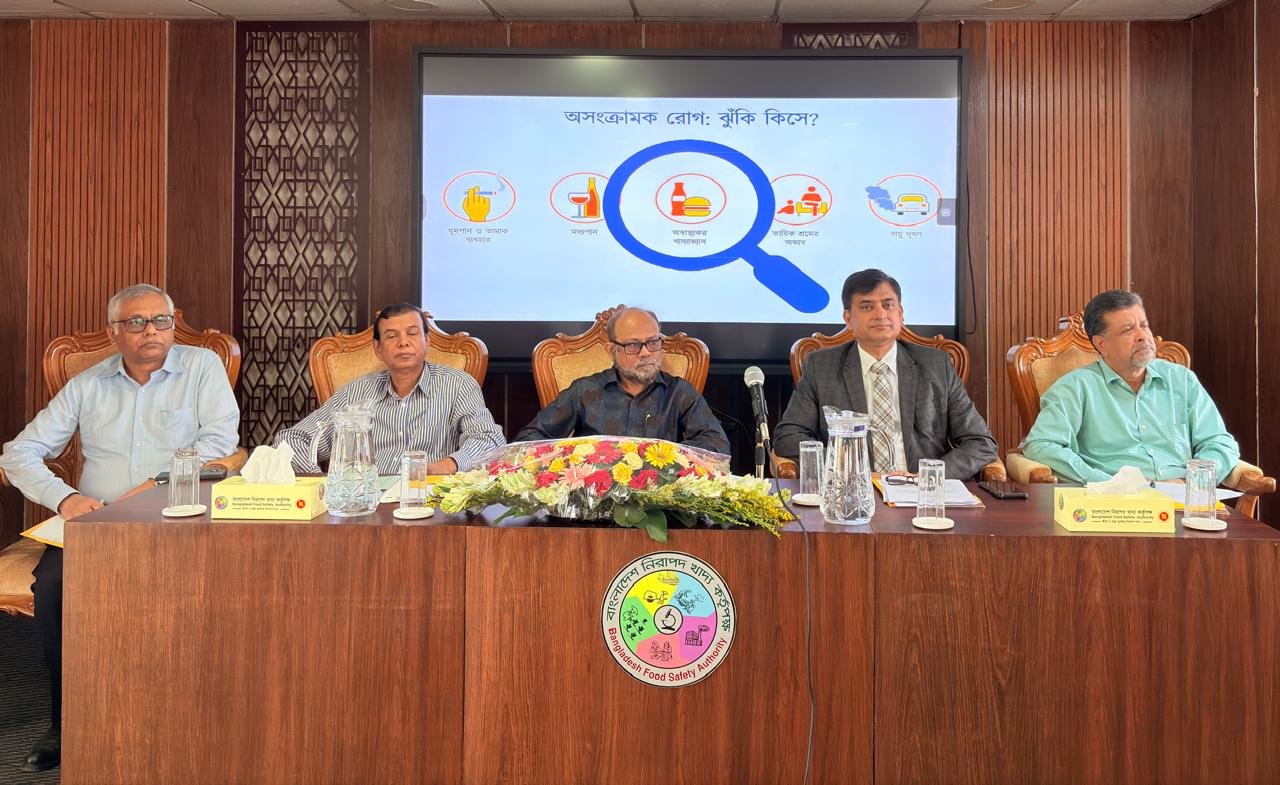
Health experts on Wednesday warned that excessive salt consumption is contributing to nearly 24,000 deaths annually in Bangladesh and called for coordinated national efforts to address the growing public health threat.
The concerns were raised at a public awareness seminar organised by the Bangladesh Food Safety Authority with technical support from the National Heart Foundation Hospital and Research Institute, marking World Salt Awareness Week 2026.
Speakers at the seminar said the average adult in Bangladesh consumes nearly 9 grams of salt per day — almost double the maximum limit recommended by the World Health Organization (WHO).
They noted that excessive salt intake significantly increases the risk of hypertension, heart disease, stroke, kidney disease, stomach cancer, and other non-communicable diseases (NCDs).
The seminar was chaired by Md Anwarul Islam.
Delivering the welcome speech, Professor Dr Mohammad Shoeb described excessive salt intake as a major global public health concern.
He said reducing salt consumption requires greater awareness at individual and family levels alongside stronger initiatives from food manufacturers to lower salt content in processed foods.
He also stressed the importance of stronger public health policies, effective regulations, and coordinated national interventions.
Dr Ahmad Khairul Abbar said around 71 percent of all deaths in Bangladesh are caused by NCDs, while 51 percent of those deaths occur prematurely.
He noted that one in four adults in Bangladesh suffers from hypertension, although most cases remain uncontrolled.
World Health Organization Programme Officer Samina Israt highlighted the importance of introducing Front-of-Pack Labelling (FOPL) in Bangladesh as a cost-effective strategy for reducing diet-related health risks.
She said clear nutrition information on packaged foods would help consumers make healthier choices and encourage manufacturers to reformulate products with lower salt content.
Professor Dr Sohel Reza Choudhury expressed concern over “hidden salt” in processed and packaged foods, including chips, chanachur, instant noodles, pickles, soups, and biscuits.
“Many consumers unknowingly consume excessive sodium through processed foods,” he said, calling for mandatory warning labels and stricter regulation of processed food industries.
Professor Dr Md Saidul Arefin warned that the growing popularity of processed foods among children and adolescents could further increase the burden of non-communicable diseases in the future.
Faruk Ahmed said excessive salt intake has become a “silent public health threat” in Bangladesh and urged food manufacturers to act responsibly.
The seminar also recommended practical measures such as reducing salt during cooking, avoiding extra table salt, limiting processed foods and sauces, and checking nutrition labels before purchasing packaged foods.
Speakers concluded that tackling NCDs requires coordinated action involving the government, food industries, healthcare professionals, educational institutions, and the media.
The event was held under the theme “Let’s Reduce Salt in Our Food Together” and attended by public health experts, physicians, nutritionists, researchers, academics, and representatives from government and private organisations.