Sk Shoaibur Rahaman
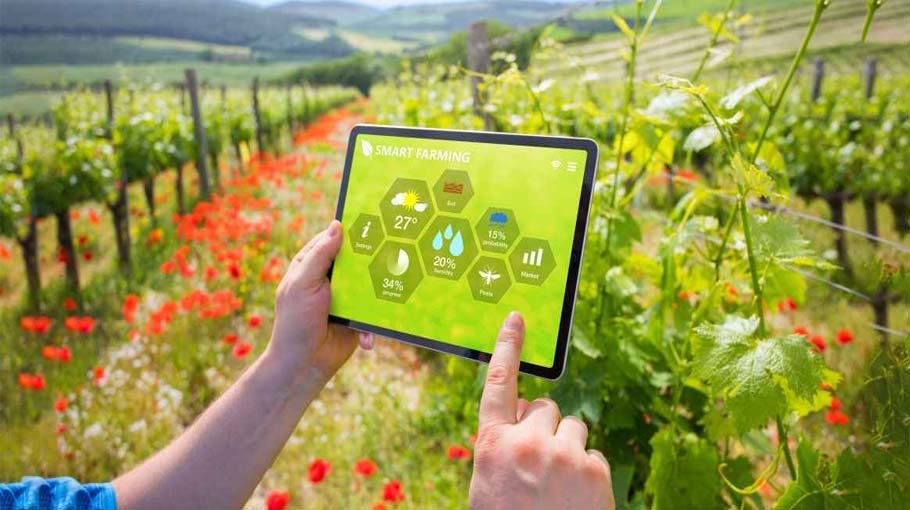
Technology has been shaping the whole world dramatically. It has massive potential to change our agriculture too. Though agriculture in Bangladesh has not yet been widely transformed with smart technologies, some countries in Europe, the USA, and Japan have fostered advanced technologies to improve the quality and quantity of farm produce. A study confirmed that approximately 60% of USA farms have incorporated some form of smart technologies to enhance crop production, especially in high-value crops like corn, soybeans, and wheat. We don’t need to look so far as our neighbor country India has leveraged technologies like Artificial Intelligence (AI), Machine Learning (ML), Internet of Things (IoT) in the farming sector and making the best of it.
According to FAO, the world population will reach 10 billion by 2050, agricultural production must be increased to meet the increasing food demand. How are we going to address it? It is only possible by incorporating technologies in agriculture to make our production double compared to the present.
Now come to the point of what types of technologies have the potential to transform our cultivation sector. Let’s discuss.
• Artificial Intelligence (AI): AI analyzes the data sourced from numerous sensors installed in the farm field and satellites. With its help, AI develops models to predict plant diseases, their outbreaks in particular areas, and gives information about the best time to fertilize, and even the time for pesticide spray and irrigation. If farmers know ahead when the plant disease will appear, they will be able to take precautionary measures, and as a consequence, it will save 20-30% yield loss (save of billion dollars).
According to FAO, the world population will reach 10 billion
by 2050, agricultural production must be increased to meet
the increasing food demand. How are we going to address it?
It is only possible by incorporating technologies in agriculture
to make our production double compared to the present.
• Internet of Things (IoT): By installing IoT sensors in cultivating fields, real-time data on soil moisture, soil temperature, nutrient level, and crop health can be achieved. Those data give farmers thorough insights and interpretations to optimize irrigation schedules and fertilizer requirements.
• Drones & Robotics: Drones are a very powerful technology for surveying farm fields, facilitating to identification of infested areas by pests (pathogens, insects & mites, and weeds). Thus, localized and precise treatment of crops in the field is possible. Robotics accomplished sowing and harvesting, allowing these tasks to be completed more quickly and efficiently than by human labor.
• Blockchain Technology: Consumers are more concerned about what they eat, how the produce comes from field to table, and the degree of safety in consumption. So, consumers want transparency in the supply chain which could be ensured through the robust implementation of Blockchain Technology in which records of information are kept from sowing to harvesting to marketing to consumers’ kitchens. As a result, this technology can build trust among the consumers.
• Genomics & Genetics Engineering: With the improved techniques of Genomics and Genetic Engineering, it is now easier than ever to release new varieties of crops that have the potential to give high yields by withstanding in disease-prone and drought areas means they are capable of tolerating abiotic (temperature, rainfall, drought, etc.) and biotic (insects, pathogens, weeds) stresses.
To conclude, digital technologies can transform our agriculture beyond our thinking by reducing yield loss, accelerating production, ensuring quality, and establishing transparency among people. The government of Bangladesh should come forward to make this digital farming ecosystem into reality by providing sufficient funds and introducing necessary policies.
[The author is the CEO of an agricultural organization Agri-Science Society (AgSS) and an MS student of Genetics & Plant Breeding at Sher-e-Bangla Agricultural University
(SAU), Dhaka.]