Eyad Abu Shakra
It would be fair to say that Israel’s current government is the most extreme since the country’s founding in 1948. I believe that this is indeed the case, though I was not a witness to the founding event itself.
Since that time, like many others, I have had the opportunity to read about Jewish history, as well as the history of the Zionist movement, religious conflicts in Europe, and of Western colonialism, including the Arab world — “the Persians and the Berbers, and those who had been part of this era of great power,” as the 14th-century Arab scholar Abd Al-Rahman Ibn Khaldun once said.
I have also been fortunate enough not to have drawn the modest knowledge I accumulated solely from my Arab environment, which is only a segment of a broader global civilization, and to have benefited from living and studying in the West for nearly half a century.
Over this long period, my horizons broadened, and many assumptions I had grown up with — shared by generations of my peers, family, acquaintances, and friends — dissipated. Incidentally, after this half-century, I do not claim to have become more aware or knowledgeable. I now merely recognize the extent of ignorance; that there is much I do not know.
Among the assumptions that collapsed for me was the simplistic and absolutist view of the Arab-Israeli conflict, especially on the Israeli side.
In Lebanon of the 1950s and 1960s, specifically up until June 1967, Jewish people were not alien to my social world or culture. The decades that followed, however, shook many ideas that had been taken for granted.
I no longer see Israel as a “small entity” that could be overrun in a day or two, for one thing. It has also become clear to me that Israel is not an “orphan.” It has allies, patrons, and protectors, and it has “lobbies” whose power, influence, and weight we are only now beginning to grasp.
That said, I have never approached this question with fascination — certainly not the kind of fascination that leads to unconditional surrender. Unconditional surrender is not a viable foundation for any relationship between peoples. Any relationship between groups, even adversaries, must be built on honesty, candor, and mutual respect for the right to a dignified life, as well as sincere belief in humane values, justice, and the rule of law, without discrimination, domination, oppression, or exclusion.
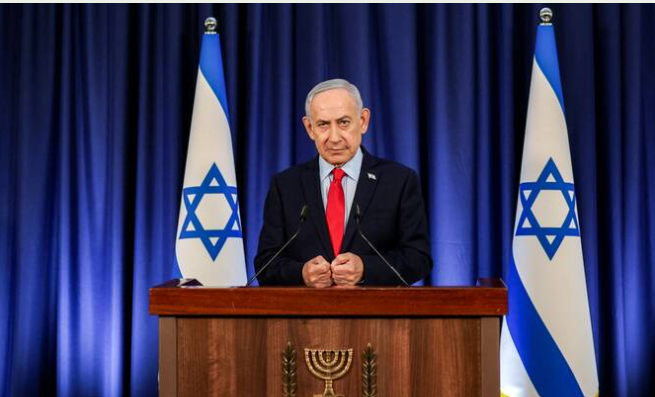
The Zionist movement, in turn, has undergone many transformations. It had initially been composed of a diverse and even contradictory intellectual and political factions. Israel today is ruled by a right-wing government headed by Benjamin Netanyahu, a student of the “Revisionism” pioneered by Ze’ev Jabotinsky and brought to power by Menachem Begin. However, the country was not always right wing.
Indeed, socialist Zionist factions had been dominant in Israel at first. Mapai, the Workers’ Party of Israel, was the strongest of these. Mapai, the Histadrut or labor federation, and cooperative farming experience — kibbutzim and moshavim — defined the early settlement period. These even had their own sports clubs under the name “Hapoel” or the "worker." Alongside Mapai, and before and after it, other moderate socialist parties, most notably Mapam and Ahdut HaAvoda, were also prominent.
But that era is now past. Today is the “age of the right” — indeed, the far right.
Political life in Israel now stretches across a spectrum that begins with the “moderate right,” with figures such as Yair Lapid, former interim prime minister and leader of the opposition party Yesh Atid, and ends with the most extreme settler-driven fascist right: the Kahanist “Jewish Power” party led by National Security Minister Itamar Ben-Gvir, and the Religious Zionism party led by Finance Minister Bezalel Smotrich.
It is worth noting, for those who may not remember, that the extremist American rabbi Meir Kahane (1930–1990) founded the terrorist Kach party and was assassinated by the Egyptian youth El Sayyid Nosair.
Today, Kahane’s “disciples” have come together in Ben-Gvir’s party, whose parliamentary bloc includes five of the Knesset’s extreme members. They are led by MP Yitzhak Kroizer, who recently said: “Killing Palestinian children is normal if it serves the mission of the Israeli army,” and MP Limor Son Har-Melech, who was among the most prominent sponsors of a bill calling for the execution of Palestinian prisoners.
Under these circumstances, there is no longer room in Israel for a real democratic contest between right, center, and left.
There can be no democracy, rule of law, or chance for balanced coexistence when the national security minister openly arms settler militias before the eyes of the global press, and the finance minister allocates vast sums to demolish homes, finance wars, and build more settlements in accordance with “Torah teachings” and Talmudic injunctions, and while the Knesset votes on a law that allows for the execution of Palestinian prisoners exclusively in a grotesque tangible manifestation of Israel’s apartheid system.
Of course, that is not to say that there exists a number of reasonable and principled Israeli figures and forces who, along with Jewish individuals across the world, courageously reject this appalling slide toward the “legalization” of racism that follows the mass killings and forced displacement of Palestinians and Lebanese.
Just yesterday, the liberal Israeli newspaper Haaretz denounced the death penalty approved by Netanyahu’s government for Palestinian prisoners, arguing it is “complete dominance of the Kahanists” over the Israeli right. It is well known that the paper has objective and principled journalists worried about this dark future for their country among its ranks, including Gideon Levy, Amira Hass, and others.
The paradox is that Israel, which commits massacres before our eyes, destroys hospitals and schools, kills children, and carries out mass displacement, is the very same state that lectures us.
Eyad Abu Shakra is managing editor of Asharq Al-Awsat, where this article was originally published. X: @eyad1949