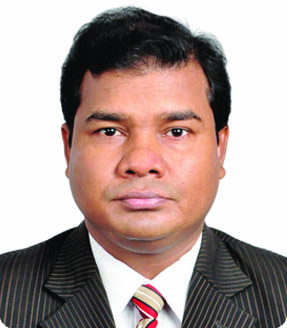
Ahammad Parvej Khan
Climate crisis is no longer only an environmental issue; it is now creating serious risks for labour, public health, and the national economy, opines experts.
They note that extreme temperatures, electricity shortages, and unplanned urbanization are forcing working people to operate in highly hazardous working conditions, while workers are increasingly facing dehydration, heatstroke, dizziness, fainting, and kidney-related complications.
Referring to a study finding an expert said that heat-related health risks are causing Bangladesh to lose nearly 250 million working hours annually, resulting in an estimated economic loss of around USD 1.78 billion, equivalent to approximately 0.4 percent of the country’s GDP.
Meanwhile, the experts at a roundtable discussion titled “Climate Crisis and the Future of Work: Journey Towards a Sustainable and Just Bangladesh”, highlighted that without effective adaptation measures, Bangladesh and the regional ready-made garment sector could face export losses of nearly USD 65 billion and the loss of around one million potential jobs by 2030.
The National Alliance for Just Transition Bangladesh (NAJTB), in collaboration with the Sustainable Manufacturing and Environmental Pollution (SMEP) Program, recently organized the roundtable at the National Press Club, Dhaka, marking the World Environment Day 2026,
The session was chaired by Syed Sultan Uddin Ahmmed, Executive Coordinator of the National Alliance for Just Transition Bangladesh.
Md Zubaer Alam, Program Officer of the Bangladesh Labour Foundation (BLF), highlighted that Bangladesh experienced one of the longest and most severe heatwaves in its history in 2024, with temperatures exceeding 43 degrees Celsius in different parts of the country.
“In 2026 as well, temperatures in most regions of the country have remained above 39 degrees Celsius. The World Meteorological Organization (WMO) has warned that there is an 80 percent probability of El Niño conditions during June–August 2026, which could further intensify prolonged heatwaves and extreme weather events”, he added.
Kutubuddin Ahmed, Chairperson of IndustriALL Bangladesh Council (IBC), remarked, “Nature cannot be fought against. If we go against nature, nature will inevitably take its revenge.”
Climate change and environmental expert Farzana Yasmin stated, “Among People, Profit, and Planet, our economic system has long prioritized only profit. Sustainable development is no longer a luxury; it is essential for survival.”
Abul Kalam Azad, Manager of the Just Energy Transition Network Bangladesh (JETNET), said, “Effective transformation is impossible if policymakers remain disconnected from reality while sitting in air-conditioned rooms. Bureaucratic barriers to renewable energy projects must be removed. Particularly for solar power projects, priority should be given to fallow, low-use, or degraded land instead of agricultural land.”
Syed Sultan Uddin Ahmmed stated that although global slogans are announced every year, very little reflection of those commitments is seen in the real lives of working people.
He called for prioritizing workers’ suffering and vulnerabilities by incorporating social protection, climate-resilient housing, and safe public transportation into collective bargaining agreements.
He further emphasized the importance of raising clear labour demands at global climate forums, developing coordinated joint position papers, and specifically identifying climate-vulnerable communities and regions.
Experts also stress mandatory workplace heat protection laws, urban greening and restoration of water bodies, climate-sensitive social protection programs, increased investment in renewable energy, and stronger public health awareness initiatives.
They also note that the growing frequency of heatwaves has become one of Bangladesh’s most pressing development and human rights challenges. Through coordinated and effective policy measures, Bangladesh can become a global example of climate-resilient, inclusive, and just development.