Temporarily exceeding the 1.5°C global warming limit set under the Paris Agreement is widely considered increasingly likely. The challenge now is to keep any overshoot as small and brief as possible by cutting emissions faster, unlocking climate finance and strengthening international cooperation.
Just over a decade ago, the world was on track for more than 4°C of warming above pre-industrial levels. Climate action since the Paris Agreement has lowered that projected trajectory to around 2.3°C if current national commitments are fully implemented.
The United Nations has been central to those efforts, calling for stronger national climate plans, a faster transition to renewable energy and greater attention to adaptation, climate justice and the financing needs of developing countries.
But progress on limiting warming has come as the planet continues to heat up. The past 11 years have been the hottest on record, while heatwaves, droughts, floods, storms and wildfires are increasingly affecting lives, economies and development.
The world therefore remains on course to temporarily exceed the 1.5°C threshold.
Against this backdrop, the next phase of climate action is not only about making new promises, but delivering on existing commitments while raising ambition further.
What Is a 1.5°C Overshoot?
The 1.5°C limit refers to the long-term average increase in global temperature above pre-industrial levels. It is not determined by a single exceptionally hot year.
An overshoot means global temperatures rise above that threshold for a period, reach a peak and potentially decline again if emissions are reduced deeply enough.
But that decline is not guaranteed. It will depend on decisions governments make now and in the years ahead.
Even if current national climate plans and additional net-zero pledges are fully implemented, warming could still peak at around 1.8°C, according to a recent UN Environment Programme report.
The difference may appear small, but it has significant consequences. The higher temperatures rise and the longer they remain elevated, the greater the risks.
“Every fraction of a degree will cost lives, destroy livelihoods, deepen inequality, and push ecosystems closer to irreversible damage,” UN Secretary-General António Guterres has warned.
Why Does Speed Matter?
The pace of climate action matters because the gap between current plans and what science requires remains substantial.
Countries responsible for nearly 90 percent of global emissions have submitted updated national climate plans, known as Nationally Determined Contributions (NDCs). But even if those plans are fully implemented, they are expected to reduce emissions by only around 10 percent by 2035.
Keeping the 1.5°C goal within reach would require emissions to fall by roughly 60 percent over the same period.
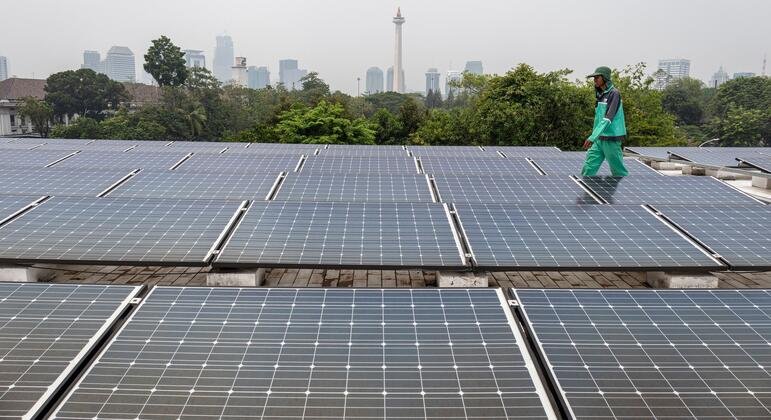
Closing that gap means cutting emissions faster, particularly methane and other short-lived climate pollutants, while halting deforestation and accelerating the shift from fossil fuels to renewable energy.
Countries also need infrastructure capable of supporting that transition, including modern electricity grids, greater energy storage and expanded use of clean electricity in transport, heating and industry.
Moving faster on renewable energy could also strengthen energy security. Three out of four people live in countries that import more fossil fuels than they export, leaving them vulnerable when conflicts or other disruptions affect global supplies and prices.
Renewable energy can reduce that dependence.
As Guterres has put it, “there are no embargoes on sunshine and no price spikes for wind.”
Why Is Finance So Important?
Countries do not have equal financial resources to make the transition to clean energy.
Developing countries often face significantly higher borrowing costs for renewable energy projects, making investment in clean power, electricity grids and energy storage more difficult even where renewable potential is substantial.
The UN has repeatedly called for more affordable financing, reforms to multilateral development banks and greater private investment in developing countries.
Finance also determines who benefits from the transition. A just transition should help workers and communities adapt to economic change, create decent jobs and enable developing countries to play a greater role in the expanding clean-energy economy.
That includes access to critical minerals needed for batteries and other clean technologies. Producing countries should be able to capture more value from those resources rather than relying primarily on exports of raw materials.
Why Does Adaptation Matter?
Cutting emissions is essential to limiting future warming, but it cannot eliminate climate impacts that communities are already experiencing.
Recent floods and landslides in Nepal and China have again highlighted the vulnerability of communities and infrastructure to extreme weather. A strong El Niño expected to persist into early 2027 could add to those risks in several regions, including parts of the Greater Horn of Africa and Latin America and the Caribbean.
Adaptation is therefore essential. It means helping people and countries cope with climate impacts that can no longer be avoided.
Measures can include building stronger roads, homes and public services; supporting resilient agriculture and ecosystems; improving water management; and expanding early-warning systems so communities have more time to prepare for floods, droughts, storms and heatwaves.
Adaptation also requires greater financing, particularly for countries and communities most vulnerable to climate impacts and already facing climate-related loss and damage.
Why Do We Need Cooperation?
No country can tackle climate change alone.
Although governments set their own climate policies, many of the systems needed to implement them cross national borders, including energy markets, finance, technology and supply chains. Greenhouse gas emissions also do not stop at national boundaries.
International cooperation can help countries accelerate the renewable energy transition, strengthen climate resilience and improve access to finance.
That does not mean every country must move at the same pace. Countries have different resources and capacities, while some face much greater financial and technological barriers.
The challenge is to help more countries overcome those barriers and accelerate action, even as geopolitical tensions make international cooperation more difficult.
Road to the General Assembly
These priorities are at the centre of the UN Secretary-General's Climate Summit on September 23 at UN Headquarters in New York.
The summit's objectives can be summed up in three priorities: accelerate the transition, unlock finance and protect people.
The meeting will bring together governments, development banks, businesses, financial institutions and civil society to focus on practical barriers to implementation.
As part of the summit, Solutions Dialogues will also take place during the week, focusing on practical ways to accelerate action on energy, oceans, adaptation, methane, finance, information integrity and green industrialisation.
The focus is on turning existing commitments into concrete action and finding ways to work together to accelerate delivery.