UNB:: Every year, as the April sun climbs high over the delta, the very air in Bangladesh shifts. It isn't just the rising heat of the Boishakhi summer; it’s a palpable sense of a page turning. While the Gregorian calendar marks April 14th as just another date, for the nearly 170 million souls in this land, it is the rhythmic heartbeat of a new beginning.
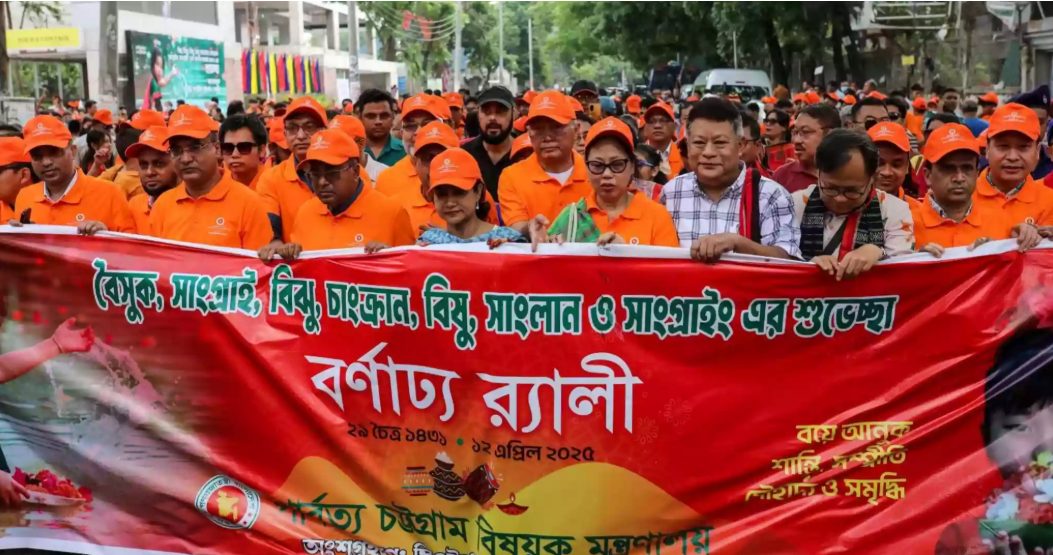
From the neon-lit avenues of Dhaka to the mist-shrouded ridges of the Chittagong Hill Tracts , the New Year arrives not as a single event, but as a symphony. While the majority celebrates Pohela Boishakh, the hills echo with seven other names: Boisuk, Sangrai, Biju, Changkran, Bishu, Sanglan, and Sangraing. Together, they form "Vaishabi," a celebration that proves unity doesn't require uniformity.
The Colors of the Hill: The Vaishabi Spirit
In the southeast, the New Year is deeply elemental a conversation with the earth, the water, and the ancestors.
Biju (Chakma)
The Chakma festival is a three-day journey of the soul.
● The Flower Ritual: Today, April 13th, children wake at dawn to gather wild blooms. They float them on the rivers (Phul Biju) to let the water carry away the hardships of the past.
● The Legend of Pajon: You cannot understand Biju without tasting Pajon. This isn't just a meal; it’s a medicine. It is a complex vegetable stew simmered with a minimum of 20 to 40 types of wild herbs, bamboo shoots, and forest vegetables. It is a taste of the forest itself.

Children and elders gather by the water's edge to float vibrant blossoms during Phul Biju, marking a peaceful and symbolic start to the New Year. File Photo: UNB
Sangrai & Sangraing (Marma & Bawm/Pankhua)
The Marma community welcomes the year through the Riju, or water festival. Huge wooden tubs are filled, and young people drench each other in water. In Marma culture, water is the ultimate purifier; by soaking one another, they ensure that no "dust" or sorrow from the old year follows them into the new.
Boisuk (Tripura)
The Tripura people honor the goddess Boisumra. The centerpiece is the Garia Dance, where performers move in intricate circles to the beat of drums, praying for the fertility of the soil and a shield against misfortune.

Dancers in vibrant traditional attire perform a soulful ritual dance, celebrating the rich cultural heritage and festive spirit of the Hill Tracts New Year. File Photo: UNB
Bishu, Changkran, & Sanglan (Tanchangya, Khiyang, & Mro)
These communities bring their own textures to the hills. The Tanchangya celebrate Bishu with vibrant hand-woven dresses, while the Mro community fills the valleys with the haunting, deep notes of the Plung (a bamboo flute).
The Pulse of the Delta: Pohela Boishakh
In the plains, the celebration takes on a grand scale. Pohela Boishakh is the thread that stitches the Bengali identity together.
● Sunrise at Ramna: In Dhaka, thousands gather at dawn under the ancient banyan tree of Ramna Batamul. As the sun breaks the horizon, the melodies of Tagore’s "Esho he Boishakh" drift over a sea of white and red.
● The Mangal Shobhajatra: This UNESCO-recognized "Procession of Well-being" is a bold, colorful parade of giant masks—owls for wisdom, tigers for courage. It is a visual promise that the nation will face the future with creativity and strength.

Participants carry vibrant, hand-crafted masks in a traditional Mangal Shobhajatra procession, symbolizing the festive spirit of Pohela Boishakh. Photo: Bangladesh Shilpakala Academy
● Halkhata: In rural bazaars, the Halkhata (new red account book) tradition survives. Shopkeepers invite customers for sweets to settle old debts, proving that the New Year is built on the foundation of community trust.
A Shared Horizon
Bangladesh is a land of nearly 170 million people and over 45 distinct ethnic groups. In a world that often feels divided, this season serves as a quiet, powerful reminder of our plurality.
The Chakma child at the riverbank, the Marma youth with a bucket of water, and the artist in Dhaka are all looking at the same sun. They may speak different languages and call the day by different names, but they are all celebrating the same resilience of the human spirit.
The New Year in Bangladesh is a beautiful paradox: it is many different festivals, but it is one single, soaring hope. As the flowers float downstream and the dhol beats louder, the message is clear: the past is behind us, and the year ahead is ours to write together.