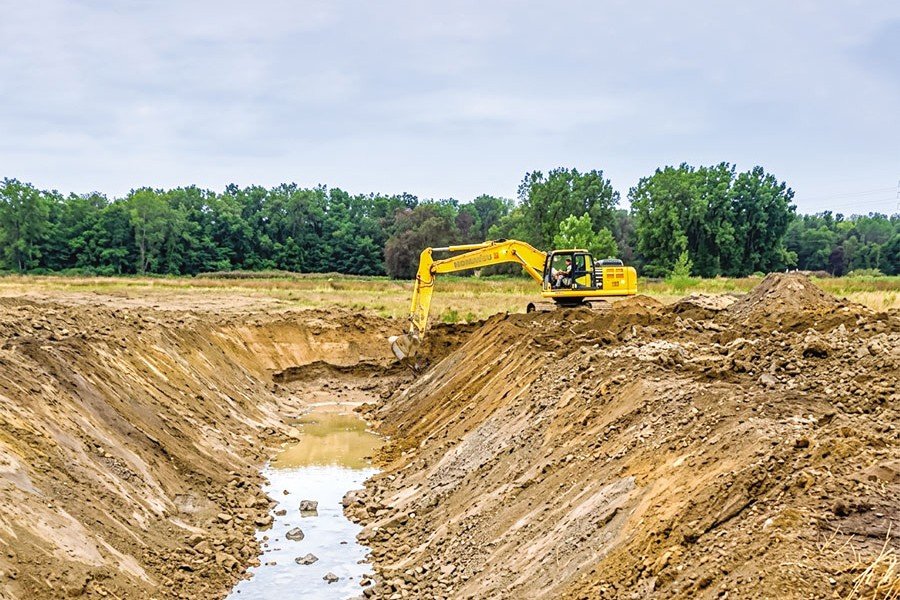
A nationwide canal excavation and re-excavation programme being carried out by the present government deserves attention and cautious optimism.
In a country like Bangladesh, where rivers, canals and wetlands have shaped agriculture, transport and rural life, this noble initiative is not merely a development project—it is an economic and environmental necessity.
For decades, countless canals across the country have gradually disappeared under the pressure of encroachment, siltation and neglect.
Many waterways that once carried irrigation water to crop fields now remain clogged or completely dry. As a result, farmers have become increasingly dependent on groundwater, which is both costly and environmentally unsustainable. At the same time, urban and rural areas alike suffer from waterlogging during the monsoon because natural drainage channels have vanished.
Against this backdrop, the government’s plan to excavate and re-excavate around 20,000 kilometres of canals over the next five years is ambitious and significant. The initiative is expected to improve irrigation, reduce waterlogging, increase surface water availability and strengthen flood management. It may also create employment opportunities for thousands of rural workers. Reports indicate that the programme has already begun in multiple districts as part of a broader national effort.
However, the true success of this programme will depend not on ceremonial launches but on honest implementation. Bangladesh has seen many well-intentioned projects lose public trust because of corruption, poor planning and lack of maintenance. Canal excavation often becomes meaningless when local encroachers reclaim the land shortly after the work is completed. If this project is to bring lasting benefits, the government must ensure transparency in spending, scientific planning in execution and strict action against illegal occupation of restored waterways.
Another important point is sustainability. Excavating a canal once is not enough. Without regular maintenance, silt will return and the same problem will reappear within a few years. Therefore, local government bodies, water management authorities and community representatives should be involved in long-term monitoring. Public participation can make the difference between a short-lived project and a permanent solution.
The canal excavation drive also carries symbolic value. It reflects an understanding that development in Bangladesh cannot rely solely on roads, bridges and urban infrastructure. Rural ecology matters. Water management matters. Agriculture remains central to the national economy, and reviving canals means reconnecting with the country’s natural geography.
Yet the government must remember that people will judge this programme not by promises but by results. If farmers receive water in the dry season, if villages become free from chronic waterlogging, and if dead canals begin to flow again, the initiative will earn public confidence.
In a climate-vulnerable nation like Bangladesh, restoring canals is more than a political pledge—it is a practical investment in resilience, food security and the future of rural life. If carried out sincerely, this programme can become one of the most meaningful development steps of recent years.