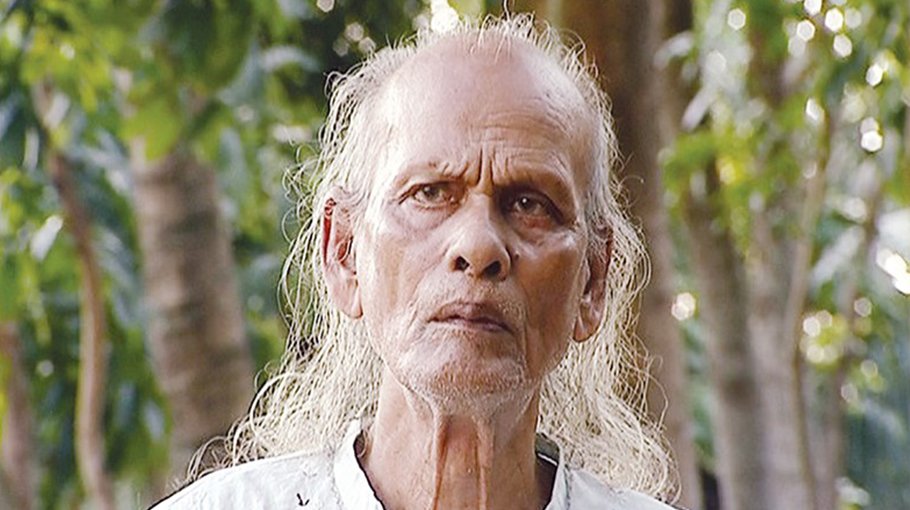
On September 12, 2009, the world lost Shah Abdul Karim, a towering figure in Bengali folk music and an esteemed Baul Samrat. Known for his profound influence on Bangladesh's cultural and social sphere, Karim’s songs vividly captured themes of love, social justice, and human equality.
Born on February 15, 1916, in the impoverished village of Ujan Dhul in Sunamganj’s Derai upazila, Karim rose from humble beginnings. His father Ibrahim Ali was a farmer and his mother Naiorjan Bibi was a village homemaker. As the only son among six siblings, Karim faced significant financial hardships, which deprived him of education. His innate musical talent and a deep sense of justice flourished despite these challenges.
Karim’s education was largely self-directed. His life experiences and keen observations became the heart of his music, which is celebrated for its profound simplicity and emotional resonance. His Baul songs, characterised by their lyrical depth, address universal themes of love, social inequity and human suffering. Karim spoke directly to the marginalised through his music, offering solace and a call for social reform.
His work gained prominence during critical periods in Bangladesh’s history, including the Language Movement and the Liberation War. Songs such as “Bande maya lagaychhe, piriti shikhaychhe,” “Aage ki sundor din kataitam,” and “Ronger duniya tore chai na” reflect his deep empathy and commitment to social justice, resonating with a broad audience. Karim received numerous accolades for these contributions, including the prestigious Ekushey Padak in 2001. His legacy is preserved through several published collections of his songs, with a comprehensive anthology released shortly before his death. Various biographies and studies have documented his influence, emphasising his enduring impact on Bengali music and culture.
Karim’s influence extends beyond his musical compositions. The Bangla Academy has translated his songs into English and his life and work have been featured in documentaries and theatrical productions. Despite his limited education, his profound impact on Bangladesh's cultural landscape remains evident.
Shah Abdul Karim passed away in Sylhet on September 12, 2009. He was laid to rest in his ancestral village of Ujan Dhul, where he continues to be honoured and remembered for his significant contributions to Baul music and Bengali culture.
Karim’s life and work represent the power of music to reflect and form societal values. His legacy endures, inspiring future generations to explore and cherish the rich heritage of Baul's music.